
What Is a Scratch Track? A Documentary Editor's Guide to Temp Narration
The term gets used loosely. Composers and music editors talk about a 'temp track' for score and source music borrowed from other films to set a mood (Wikipedia has a solid overview of that usage). In documentary and corporate narration work, 'scratch track' usually means the voice specifically: a guide read that locks approximate timing and rhythm so the edit can proceed without waiting weeks for a narrator's calendar to open up.
Scratch Track Definition
What a scratch track actually is, and what it isn't
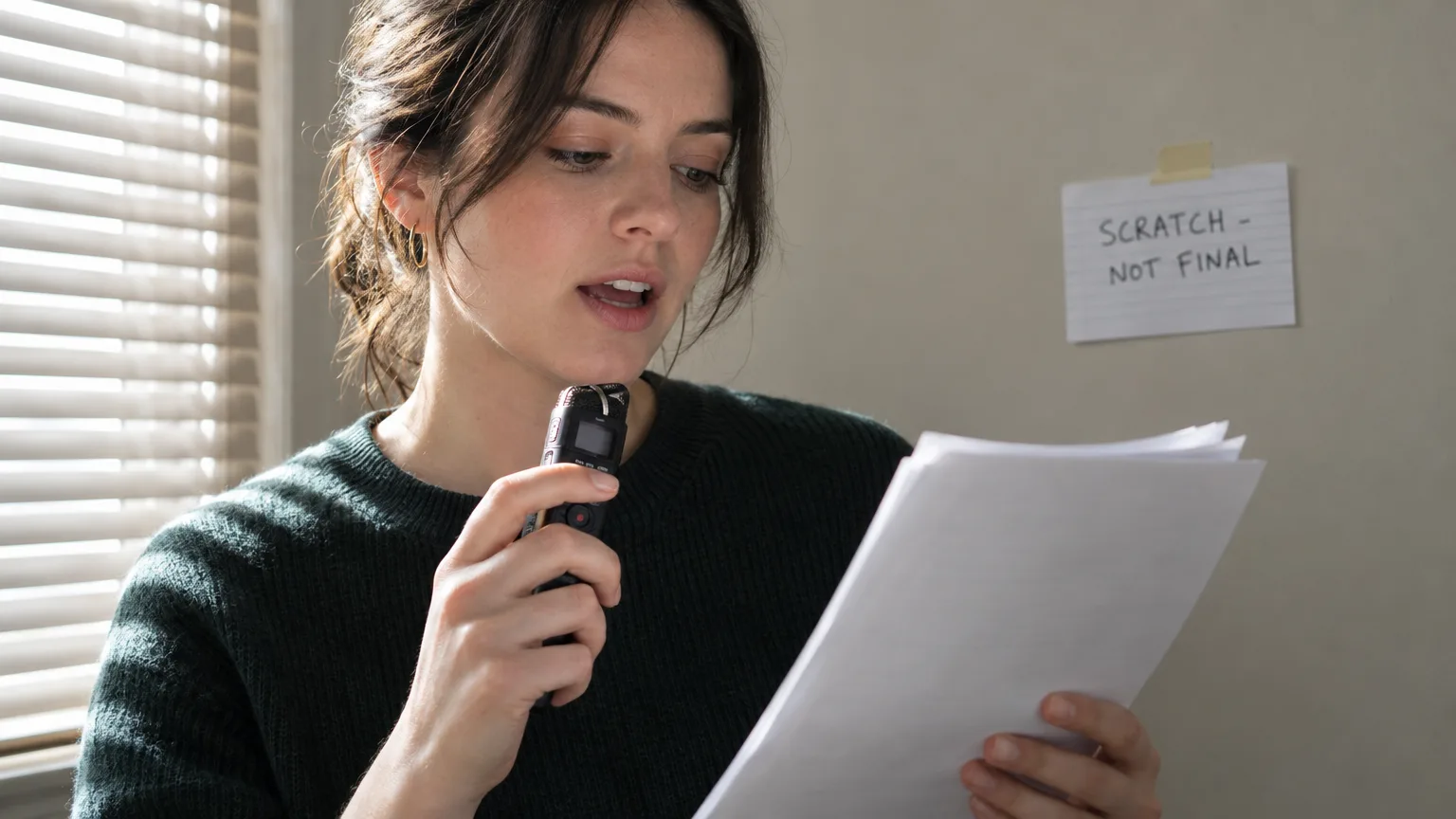
A scratch track is temporary, not fake. It uses the real script, in the real place in the real sequence. What's missing is performance quality: the scratch narrator might be the editor reading flat into a laptop mic, or a producer mumbling through a script on their phone, or increasingly an AI voice generator spitting out a clean but characterless read. None of that matters yet, because the job of a scratch track is timing, not tone.
This is different from a radio cut, which is an audio-only assembly of the subject's own words, selected and arranged before picture is touched. A radio cut is built from real interview audio you intend to keep. A scratch track is built from a script nobody intends to keep, standing in for narration that doesn't exist yet. You can have both in the same project: a radio cut of your interview selects, with a scratch narration track laid over the top to glue the sequences together while the film takes shape.
It's also distinct from a stringout or a selects reel, both of which are collections of the best raw material, not a stand-in for a missing element. A scratch track exists specifically because something is missing: the final voice.
Scratch Track Paper Edit
How the scratch track connects to the paper edit
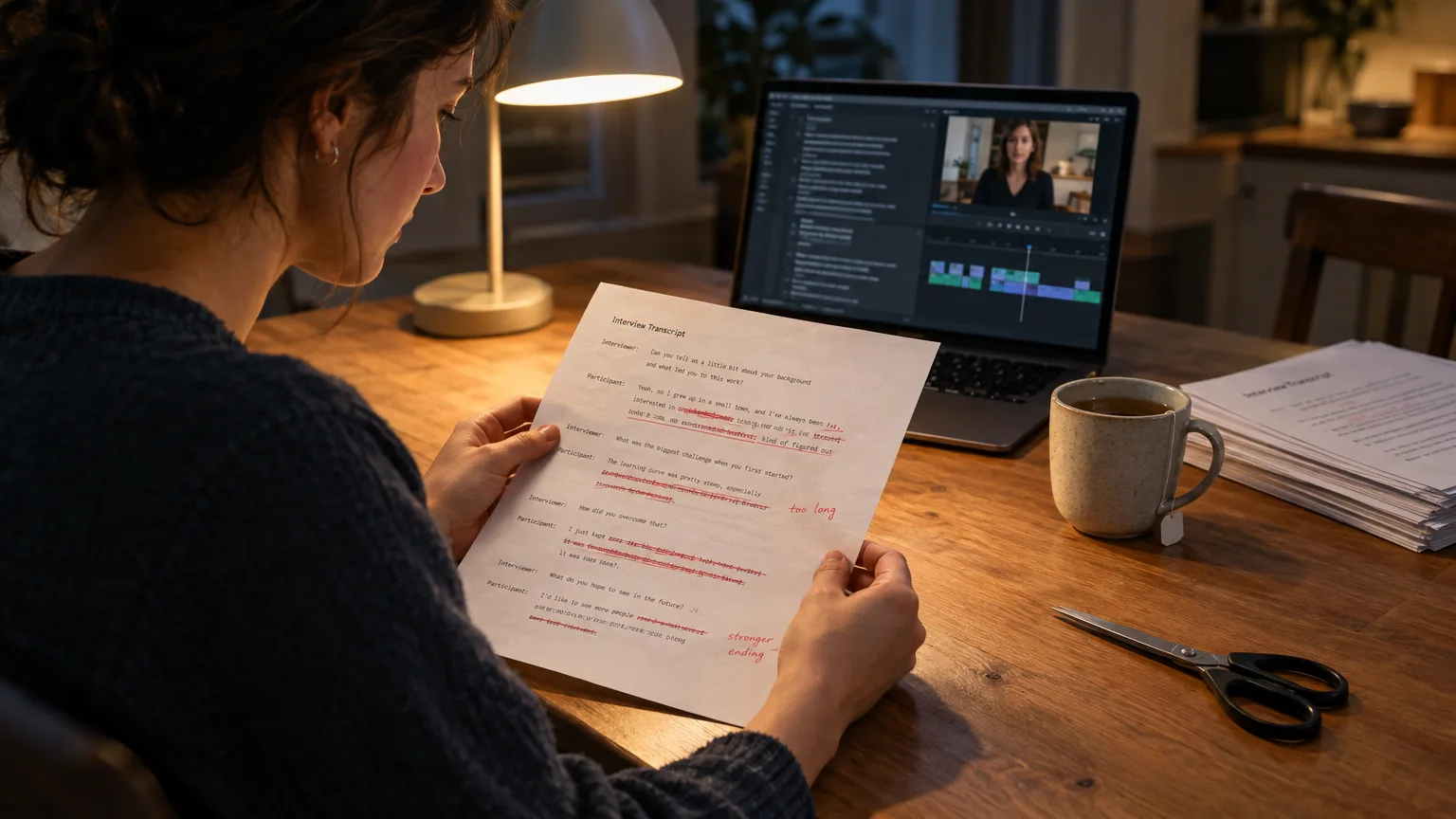
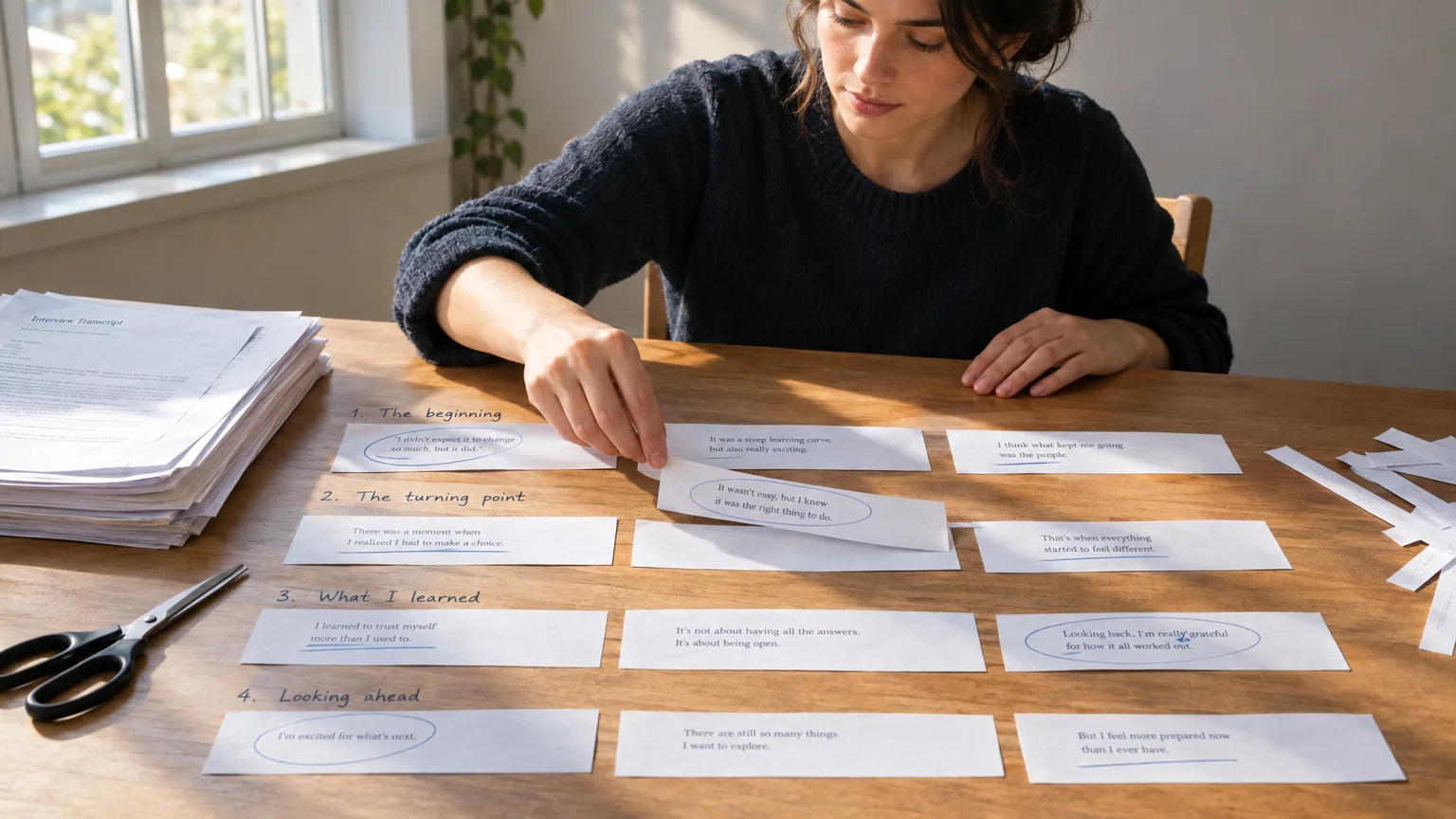
The link is sequencing. A paper edit is the written blueprint built from the interview transcript: you read every quote, pick the strongest lines, and arrange them into a narrative on the page before you ever open a timeline. Michael Rabiger describes this as working from the inside out, sculpting structure from what the footage actually contains rather than imposing a script written in advance ('Directing the Documentary' has been the standard reference on this since its first Focal Press edition in 1987). If your film leans on voiceover to carry transitions, the paper edit is also where you draft the narration script, line by line, next to the interview selects it bridges.
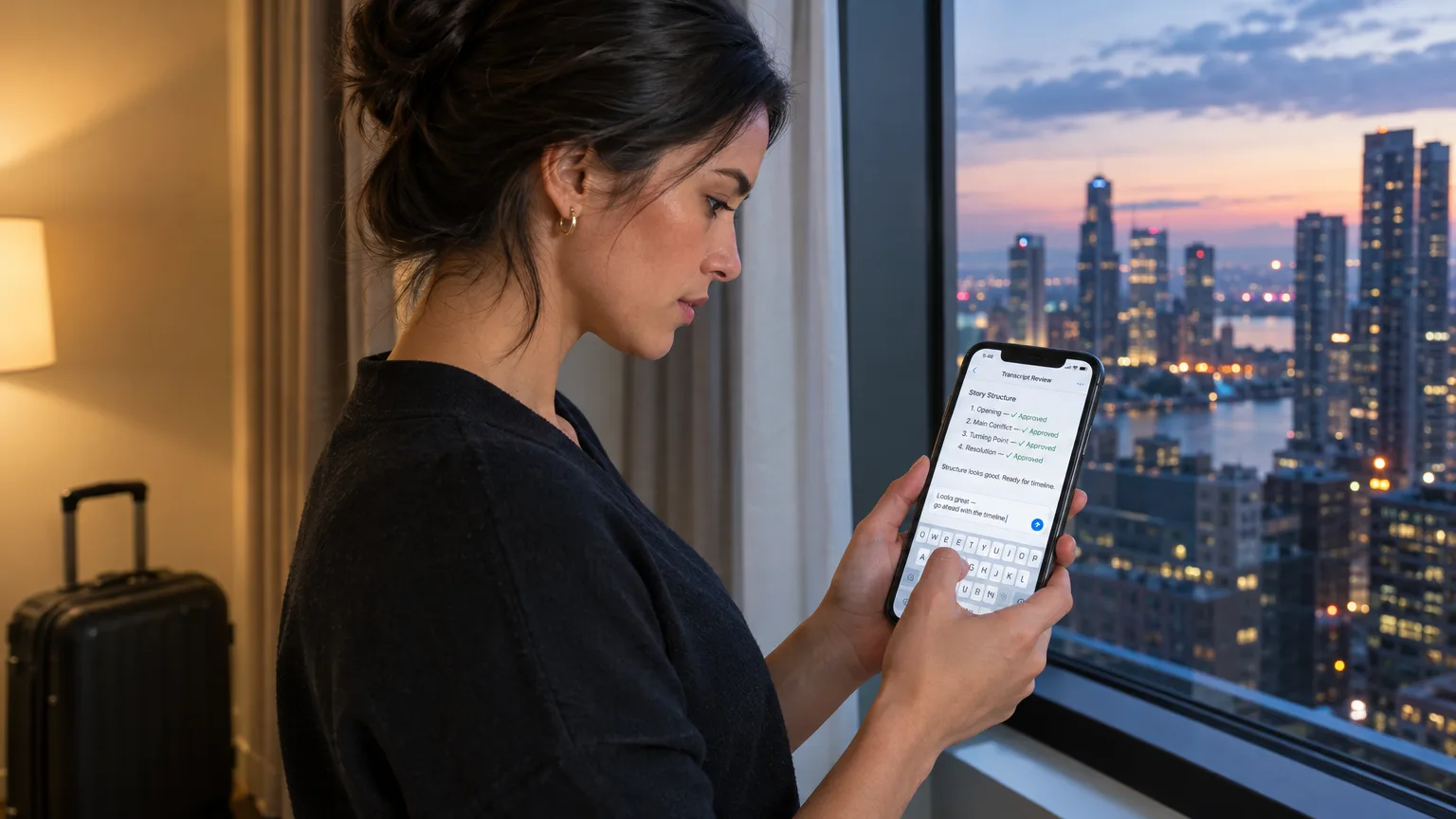
The scratch track is what happens after that paper edit leaves the page. Once you've arranged selects into a stringout and built toward an assembly cut, you record a rough read of the draft narration script and drop it onto the timeline at the points the paper edit marked for it. Now the whole thing plays back as a continuous piece, even though half the voice track is a guide and the picture is still rough. That's the handoff: paper edit decides where narration goes and roughly what it says; scratch track lets you hear and time it before anyone commits a professional voice artist or the director's own polished pass to tape.
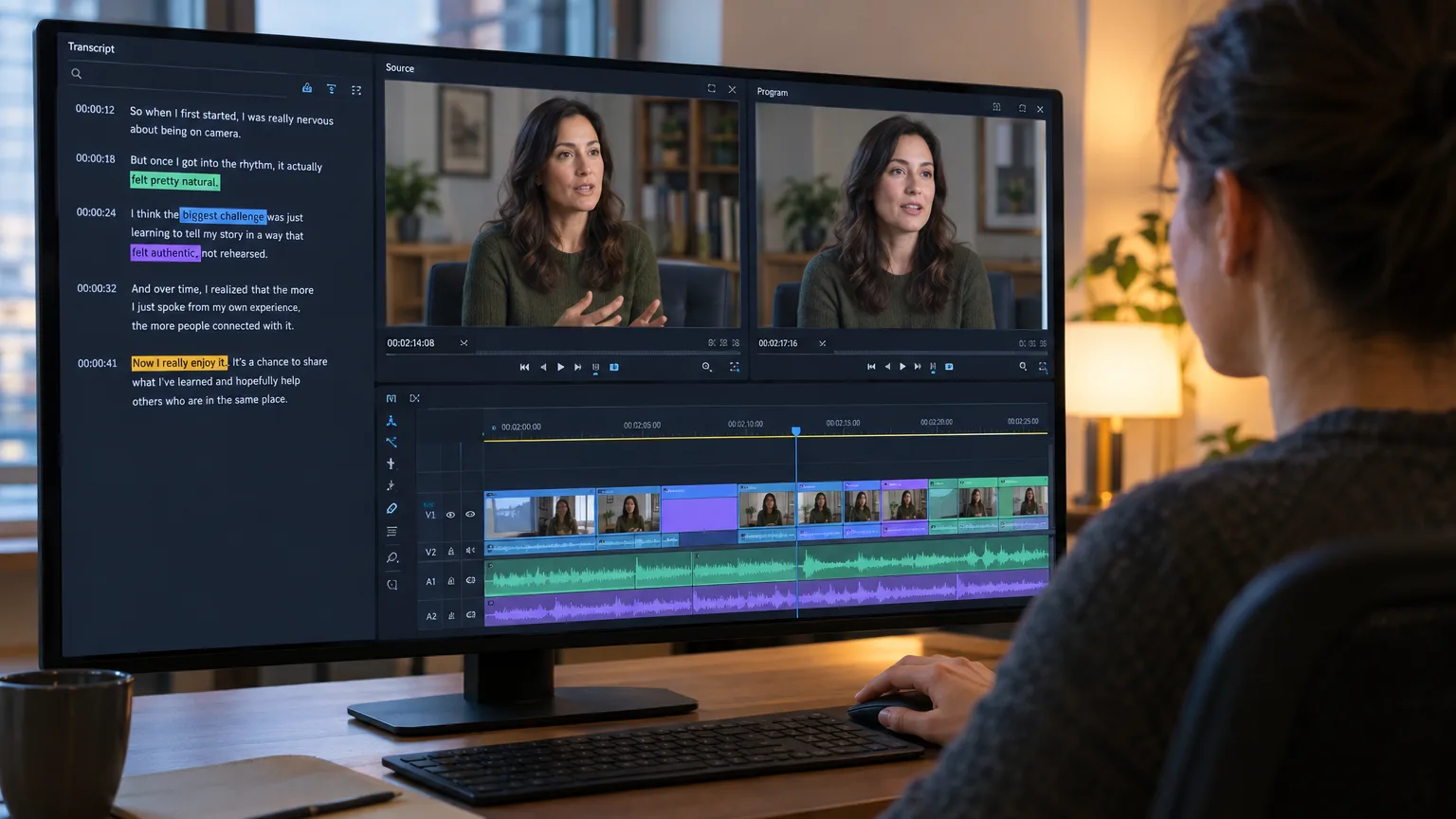
If you're working in a transcript-first tool, this handoff is smoother than it sounds. ScriptCut keeps word-level timecode on every selected line from the interview transcript, so when you drop a scratch narration line in next to a soundbite, you can play both back in context and check whether the join actually works, not just whether the words look right on the page.
Scratch Track vs Final Voiceover
When to replace the scratch narration
Swap it out once picture is close to locked, not before. Recording final narration too early means re-recording every time a scene moves, a line gets cut for pacing, or an interview soundbite replaces a narration sentence entirely, which happens constantly in documentary edits. The standard sequence, laid out well by the production guide Docs In Progress' tips on documentary voiceover, runs roughly: scratch narration first, as a rough guide track the director or editor reads so the film can be cut around it; then the edit settles and the picture gets close to locked; then the script gets rewritten to fit the final pictures with timings attached to each line; then the real recording session happens, either to picture, to timecode, or read wild and conformed afterward.
Watch for the moment the scratch track stops being temporary in anyone's head. Editors sometimes call this 'temp love,' a term that started with temp music scores but applies just as well to narration: the team hears the placeholder for three weeks straight, gets used to its cadence, and starts judging the real voiceover against it unfairly when it finally arrives. The fix isn't avoiding scratch tracks, it's labeling them loudly (literally watermark the audio or slate it) and scheduling the real recording session early enough that nobody has time to get attached.
One more practical reason to replace rather than refine a scratch track: legal and broadcast delivery. A scratch read recorded on a laptop mic will not pass a broadcaster's audio QC, and AI-generated scratch narration in particular should never ship as final without disclosure, given how fast that technology has normalized itself into pre-production.
Scratch Track Workflow Example
A worked example from a typical documentary assembly
Picture a 90-minute feature documentary built around four interview subjects and a narrator who threads the throughline. The editor starts with transcripts of all four interviews, builds a paper edit identifying the strongest 40 minutes of soundbite material, and drafts a narration script to carry the viewer between subjects where no interview answer does the job.
- The editor or an assistant reads the draft narration script into a voice memo app, chunk by chunk, matching roughly where each line should land against the paper edit's running order.
- Those scratch lines get dropped into the assembly timeline next to the interview selects. Now there's a continuous 70-minute assembly cut: real interview audio, rough b-roll placeholders, and scratch narration filling the gaps.
- The director watches the assembly, and inevitably some narration lines get cut because an interview answer turns out to say the same thing better. This is the whole reason the scratch pass happened before expensive studio time: it's far cheaper to delete a bad line of placeholder narration than to re-record a studio session.
- Once the cut tightens toward a fine cut, the narration script gets a final pass with timecodes for each remaining line, and the professional narrator or the director records to picture in a single session.
- The scratch track gets deleted from the project, not archived, because it was never meant to be heard by an audience.
This mirrors how BBC editor Dilesh Korya has described paper-editing a multi-camera interview before touching DaVinci Resolve: get the structure right on paper and in rough audio first, and the timeline work that follows goes faster because you're conforming a known shape rather than discovering one.
Common Scratch Track Mistakes
Where scratch tracks go wrong
The biggest mistake is treating the scratch read as disposable in practice but not in behavior. Teams keep the laptop-mic narration in every cut review for months, show it to the client, and then act surprised when the client has opinions about a voice that was never supposed to matter. Slate it as 'SCRATCH, TEMP, NOT FINAL' on every review link.
A close second: writing narration that only works with the scratch reader's specific pacing, then discovering the real narrator's natural rhythm breaks the cut. Leave air around narration lines in the edit rather than cutting tight to the scratch read's exact timing, so the final voice has room to breathe differently.
And a smaller, sneakier one: using AI text-to-speech for the scratch pass and forgetting that AI voices often read punctuation and emphasis completely differently from a human narrator. A scratch line that sounds punchy from a synthetic voice might sound monotone from the actual talent reading the same words with different emphasis. Don't assume the AI scratch read tells you anything about final tone, only about rough duration.
Scratch Track Honest Tradeoffs
What a scratch track can't tell you
A scratch track answers a timing question, not a performance question. It won't tell you if the narration tone fights the subject matter, whether a line lands as moving or corny, or whether the pacing that worked for a flat guide read will work for a narrator with actual dynamics. That's a smaller version of the same honest limit documentary editors live with when paper-editing interview selects: words on a page, or a rough read in your ears, are a hypothesis about the final product, not the product itself. You still have to play the real clip, or in this case book the real session, to know for sure.
That's also why it's worth separating the scratch track step from your actual interview selection work. If your transcript-first tool only lets you work with text and never lets you hear the clip, you're flying blind on tone twice over, once for the interview soundbites and once for narration. Building the paper edit properly before you ever touch scratch narration keeps both problems smaller: fewer narration lines needed, because strong soundbites are doing more of the storytelling work themselves.
If you're assembling a documentary this way, from transcript selects through a scratch narration pass to a locked structure ready for the timeline, ScriptCut keeps the interview side of that process in one place: select the lines, hear them play back, arrange the story, and hand a frame-accurate timeline to your NLE once picture and scratch narration both earn their place in the cut.
Sources
frequently asked questions
They overlap but aren't identical. 'Temp track' is often used for borrowed music that sets a mood for composers, while 'scratch track' usually refers specifically to placeholder narration or dialogue used to time an edit before the final voice is recorded.
Usually the editor, director, or a producer reads the draft script into a basic mic or phone, since performance quality doesn't matter yet. AI text-to-speech tools are increasingly used for this step too.
Wait until the picture is close to locked. Recording final narration too early means expensive re-records every time a scene changes, a line gets cut, or an interview soundbite replaces a narration line.
Temp love is when the editorial team gets so used to hearing the placeholder narration that they unfairly judge the real, final voiceover against it. Label scratch tracks clearly and book the final session early to avoid it.
The paper edit decides where narration goes in the story and drafts what it says; the scratch track is the rough audio read of that draft, laid onto the timeline so the sequence can be timed and reviewed before the final voice is recorded.
Yes, and it's increasingly common for timing purposes, but don't trust it for tone. AI voices read emphasis and pacing differently from how a human narrator will actually perform the same script.
You might also like...

Get the next ScriptCut article in your inbox
One short email a week. Editing tips and product news. No spam, unsubscribe anytime.
Start selecting.

Pick the story in the transcript, export a finished rough cut and ready to post short form video.
What are you looking for?
Get the ScriptCut newsletter
Thanks! Check your inbox to confirm.
Something went wrong. Please try again.