

How to Run a Remote Paper Edit Review With Clients and Producers
A paper edit exists precisely so the argument about story happens on the page. Reviewing it remotely just means the page is a link instead of a printout on a conference table. The mechanics are different from reviewing a cut. The discipline is the same: decide what you're approving, show only that, and record the decision somewhere nobody can later disown.
Structure first
Why Reviewing the Page Beats Reviewing a Timeline
Reading is faster than watching, and a document is cheaper to rearrange than a sequence. Those two facts are the entire argument for remote paper edit review, and they compound when the people you need sign-off from are not in the room.
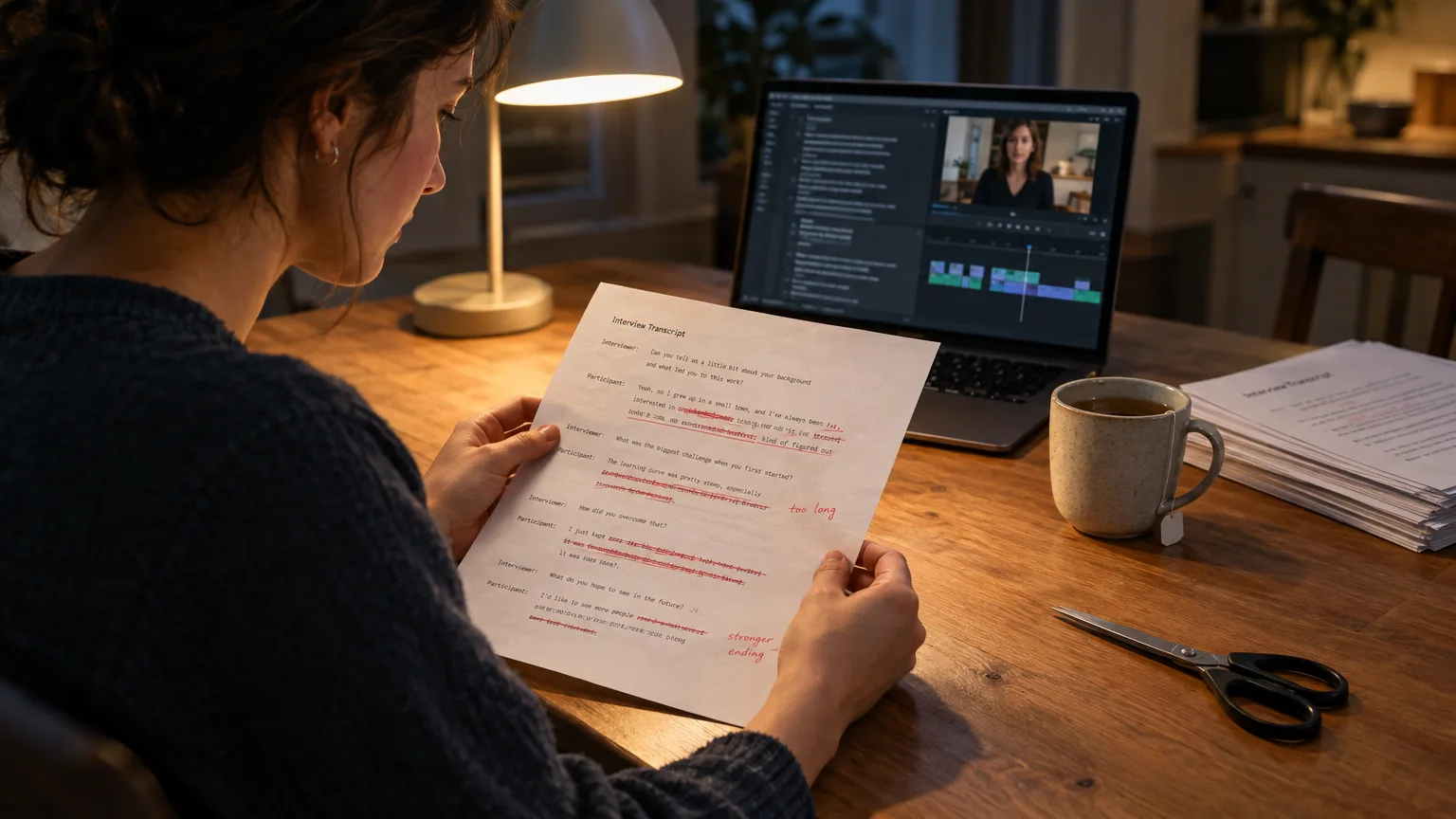
Michael Rabiger, who gave the paper edit its name in Directing the Documentary (Focal Press, first published 1987), calls the process 'a focused search for the underlying structure and factual logic that any film needs to be successful.' That search happens faster on paper because moving a paragraph costs seconds, while moving the same beat on a timeline means re-trimming handles, re-checking audio levels, and re-exporting a review link. Karen Pearlman makes a related point in Cutting Rhythms: an editor is making structural decisions constantly, and the ones made earliest are cheapest to change.
Frederick Wiseman's own process is a useful data point here, even though he doesn't use a literal transcript paper edit. On a film like La Danse, he shot roughly 130 hours against a two hour forty minute runtime, close to a 35 to 1 ratio, and he deliberately spends the first four to six weeks grading sequences before worrying about order. He is solving the same problem a remote paper edit review solves: decide what belongs and roughly where, before the expensive assembly work starts.
Documentary editor Dilesh Korya, who cut the BBC series Empire with David Olusoga in DaVinci Resolve, described the same shortcut in a RedShark News profile: a one hour, three camera interview gets transcribed, exported to text, paper edited by the producer, and conformed back to a timeline, a step he says pays for itself because the structural argument is settled before the conform. Doug Blush used the same logic at a much larger scale, turning more than 30 hours of interview footage into a roughly 5 hour assembly with co-editor Jennifer Raim by working from paper selects first rather than scrubbing a timeline looking for a shape.
Step by step
Running the Review: Link, Comments, Sign-Off
There are four moves in a remote paper edit review, and skipping any one of them is where the process breaks.
- Share a read-only link, not an editable file. If a producer can silently delete a line, you lose the record of what changed and why. Send a share link that lets people comment on specific selected lines without altering the underlying selection.
- Scope the ask in the first line of the message. Tell reviewers exactly what you want notes on: order, missing context, anything that misrepresents a speaker. Don't ask an open-ended 'thoughts?' question, because you'll get color and music notes on a document that has neither.
- Require comments to attach to a line, not float in an email. A note that says 'the opening feels slow' on a general thread is not actionable. A comment pinned to the third selected line, saying that line repeats a point made in the first, is something an editor can act on in one pass.
- Close every round with an explicit approval, not silence. No response is not a yes. Ask for a one line confirmation ('structure approved, proceed to cut') from a named person, and keep that message or comment somewhere retrievable.
This is the same spine covered in more detail in how to get client approval before you edit, and the actual mechanics of building the selects and ordering them are covered step by step in how to do a paper edit, step by step. The remote piece layers on top: who gets the link, in what order, and what counts as a recorded decision.
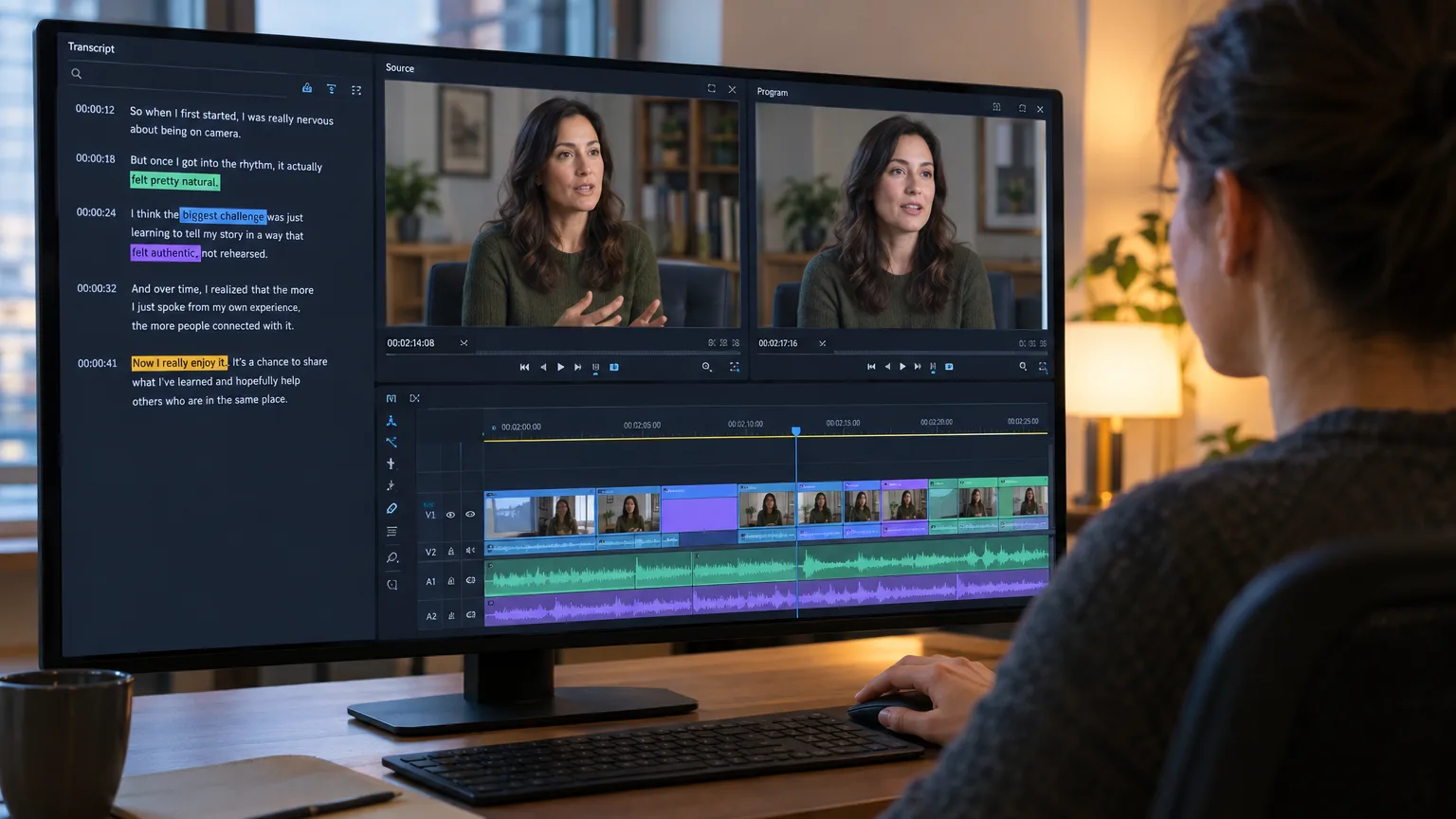
In ScriptCut specifically, each selected line carries its own word-level timecode, so a reviewer can play back the exact clip behind any line to check tone before approving it, rather than trusting the words alone. Share links through ScriptCut are built for this review stage: a producer or client opens the link, reads the arranged selects, and comments against a line without being able to quietly reorder your work underneath you.
Common mistakes
Sending a Timeline When Nobody Asked to See One
The single most expensive mistake in this whole process is skipping the paper review and sending a rough cut for structural sign-off instead. It feels faster because it looks finished. It is almost always slower, because every structural note now means re-trimming, re-leveling, and re-exporting instead of dragging a line up a page.
A few other patterns show up often enough to name directly:
- Inviting every stakeholder at once with no order. A producer approves the structure, then a founder weighs in with a creative note, then legal flags a line, and you're now re-litigating a decision that was supposedly closed. Sequence your reviewers: internal producer first, client second, legal or compliance last if there's a sensitive claim in the footage.
- Treating access as approval. Sharing a link is not a sign-off. Someone can open a document, read it, say nothing, and later claim they never approved anything in it. Get the explicit word.
- Mixing structural notes with line level wording notes in the same round. If a client is rewriting individual sentences while a producer is still arguing about whether a whole section belongs, you'll burn a round reconciling two different kinds of feedback. Separate the rounds: is this the right story, then is this the right line.
- Forgetting the footage behind the words. Errol Morris, who famously refuses to work from transcripts at all, put it bluntly in a Transom interview: 'Paper cuts give you a very false idea.' He's not wrong that a transcript strips out tone, hesitation, and timing. The fix isn't abandoning the method, it's treating the approved paper structure as a hypothesis and checking each selected clip's tone before you lock anything, which is exactly why playable selects matter more than a plain text document.
Worked example
A Three Stakeholder Review, Walked Through
Picture a 90 minute founder interview being cut into a 12 minute brand documentary, with a producer, the founder's comms lead, and the founder herself all reviewing remotely across three time zones.
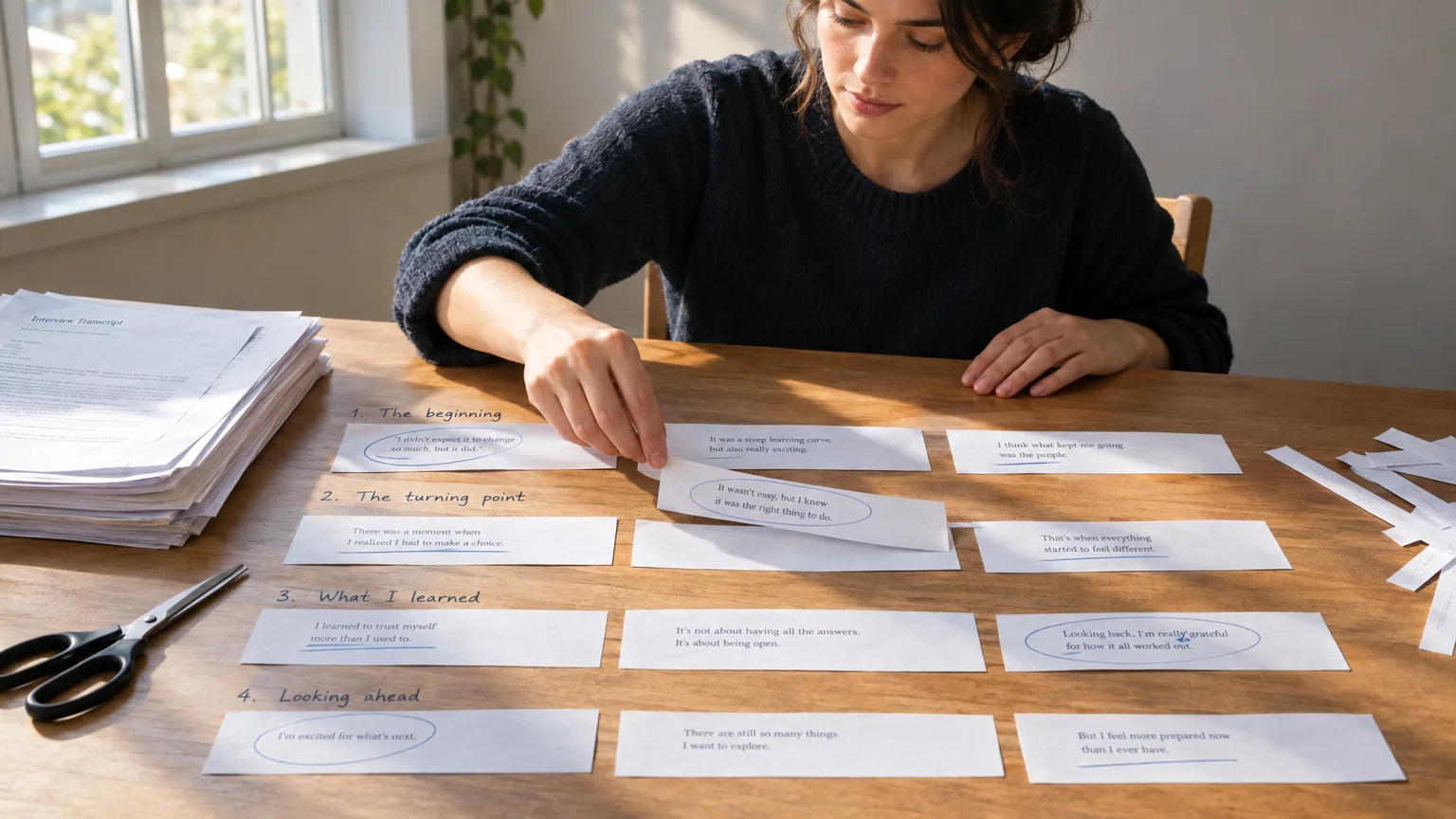
Round one goes to the producer alone. They get a share link to the full selects arranged into a story order: cold open, origin, conflict, resolution. The producer flags that the resolution section front loads two lines that say the same thing and suggests cutting one, a change made in under a minute because it's just deleting a row.
Round two goes to the comms lead, with the producer's approved version. Their note: a line about a competitor needs softer phrasing or it should come out entirely, since it wasn't cleared for public use. That's a real-world version of the kind of question Manfred Becker explores in Creating Reality in Factual Television: reordering and tightening a subject's words is normal editorial craft, but stitching separate lines together to manufacture a claim they didn't make is the frankenbite line you don't cross. The comms lead isn't being precious, they're protecting against exactly that risk.
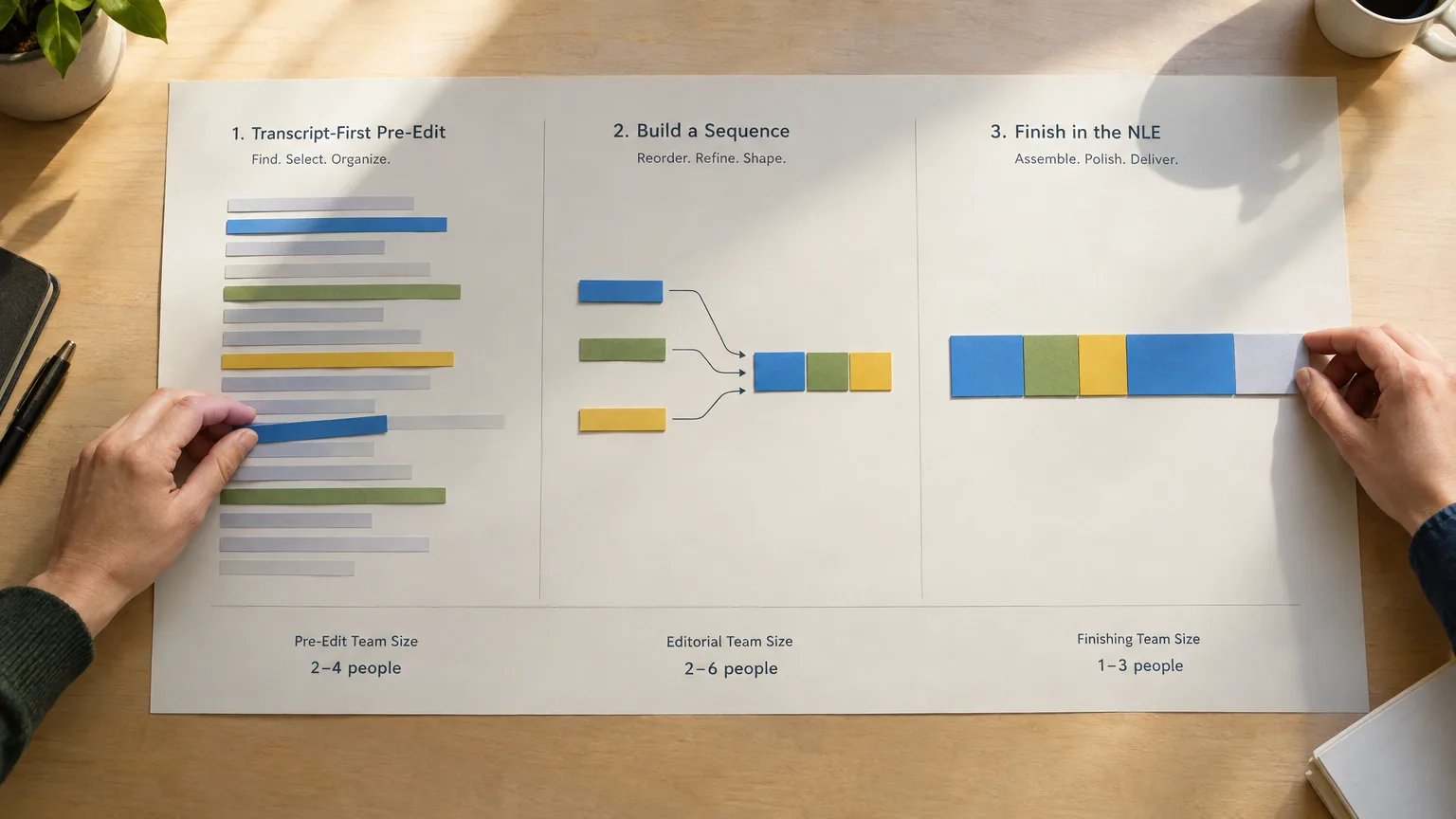
Round three goes to the founder for final sign-off, with both prior rounds resolved. She approves with one line: 'structure approved, cut it.' That message is the record. Only after that does anyone open an NLE, and the handoff from the approved paper edit into the timeline, covered in exporting a paper edit to Final Cut Pro and Avid, is now mechanical rather than creative: the arguing already happened on the page.
The tradeoffs
What a Remote Paper Edit Review Can't Catch
Words on a page can't show you a flat delivery, a nervous laugh that undercuts a serious line, or a long pause that changes the meaning entirely. This is the real substance of Errol Morris's objection, and it's worth taking seriously rather than dismissing. A transcript is one representation of the material, not the material itself.
The practical answer isn't to skip paper review, it's to add one verification step before structure gets locked for good: play back every approved line against the actual clip. That's a different task from reading the document, and it catches a different class of problem, the kind Rabiger himself warned about when he cautioned that over-trusting the transcript can produce 'a very flat talking heads film' even when every line reads well. Remote review handles the argument about order and content. A clip-level pass handles tone. Do both, in that order, and you get the speed of paper review without inheriting its blind spot.
Keeping records
What Approval Actually Needs to Mean
An approval is only useful later if it's attached to a specific version and a specific person. 'I thought we changed that' is a sentence that shows up constantly on productions without a clear sign-off trail, and it's always a symptom of treating a comment thread as a decision log instead of keeping one on purpose.
Practically, that means naming the version before you share it ('Draft 3, October 28'), asking for approval against that named version specifically, and not touching the structure again until someone with authority has signed off on it in writing somewhere you can find later. Jessica Abel's Out on the Wire describes a related discipline from This American Life called hand-logging, where producers mark a sheet of symbols against a script as they listen, specifically so a reaction doesn't evaporate the moment the next version arrives. The tool is different from a share link comment thread, but the instinct, capture the decision at the moment it's made, is identical.
Before you lock a paper edit remotely, pull everything into one place using a free transcript and caption converter if you need to hand a clean reading copy to a reviewer who doesn't want to open a transcription tool. Then put the approved structure, and only the approved structure, in front of your NLE.
Run your next remote review inside ScriptCut: share the arranged selects, let reviewers comment on specific lines, play any clip to confirm tone before you lock, and keep one clean approval record instead of a scattered email thread.
Sources
- Errol Morris, 'Lost on the Page,' Transom.org
- Karen Pearlman, Cutting Rhythms: Creative Film Editing, Routledge
- Manfred W. Becker, Creating Reality in Factual Television, Routledge
- Jessica Abel, Out on the Wire, 'Feel the Burn'
- RedShark News, 'Cutting with Curiosity: Inside a Documentary Editor's Workflow'
frequently asked questions
It's the process of sharing the arranged selects from a paper edit with clients or producers who aren't in the room, getting their comments pinned to specific lines rather than general reactions, and collecting an explicit sign-off before anyone starts timeline work.
Moving a line in a document takes seconds, while moving the same beat in a timeline means re-trimming, re-leveling, and re-exporting. Settling the argument about story on paper first avoids paying that cost repeatedly.
Sending a rough cut for structural sign-off instead of a paper edit. It looks more finished, but any structural change then costs hours of timeline rework instead of a one-line edit to a document.
No. Someone can open a link, read it, and say nothing, then later claim they never approved anything in it. Always ask for an explicit written confirmation tied to a named version before you proceed.
Not on its own. A transcript strips out delivery, pauses, and body language, which is exactly why Errol Morris refuses to edit from transcripts at all. The fix is playing back every approved line against the actual clip before locking the structure for good.
Sequence reviewers rather than inviting everyone at once: an internal producer typically goes first to catch obvious issues, then the client, then legal or compliance last if there's a sensitive claim in the footage.
Once the paper edit is approved, the handoff into an NLE becomes mechanical rather than creative, since the structural argument already happened on the page before anyone built a timeline.
You might also like...




Get the next ScriptCut article in your inbox
One short email a week. Editing tips and product news. No spam, unsubscribe anytime.
Start selecting.

Pick the story in the transcript, export a finished rough cut and ready to post short form video.
What are you looking for?
Get the ScriptCut newsletter
Thanks! Check your inbox to confirm.
Something went wrong. Please try again.