
What Is an Assembly Edit (Assembly Cut)?
An assembly edit is the first full version of a sequence, every selected piece of footage placed in order, with no trimming, no sound design, and no color. It exists to prove the story works structurally before anyone invests time polishing a scene that might get cut entirely. Here is what it actually contains, how long it should run, and why rushing past it costs more time than it saves.
What it is
The first complete pass, not a polished one
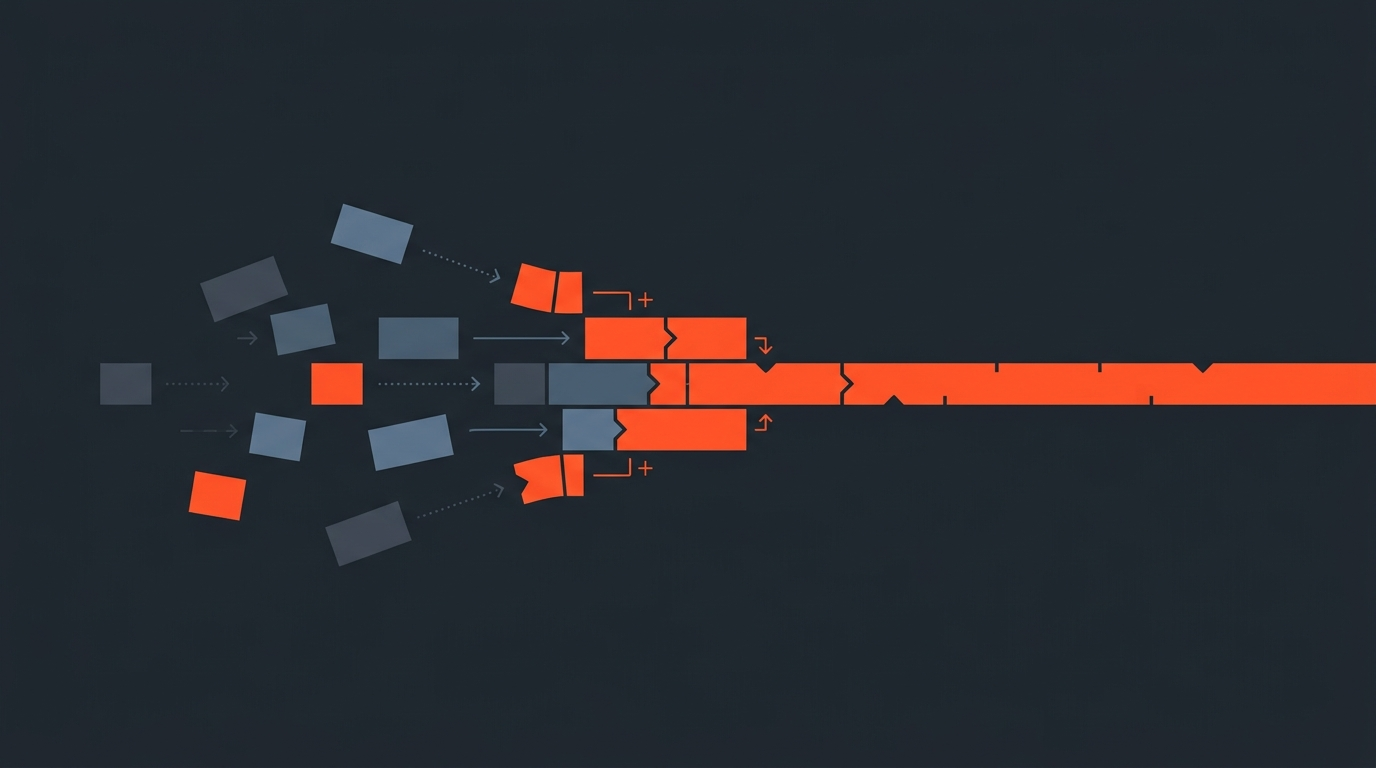
An assembly takes every clip an editor has selected as usable and places them in the order the story currently suggests, start to finish. Nothing is trimmed tight, transitions are usually straight cuts, and music or sound design is either absent or a rough placeholder. The point is not to look finished, it is to let the story be watched as a whole for the first time, so obvious structural problems, a slow open, a section that drags, an ending that does not land, show up before anyone spends hours perfecting a scene that later gets removed.
It helps to think of an assembly as a proof of concept rather than a draft of the finished piece. A draft implies the shape is basically right and needs refinement. A proof of concept is testing whether the shape is right at all. Watching one back should feel closer to reading a first outline than watching a nearly-finished video, and editors who expect polish at this stage are judging it against the wrong standard.
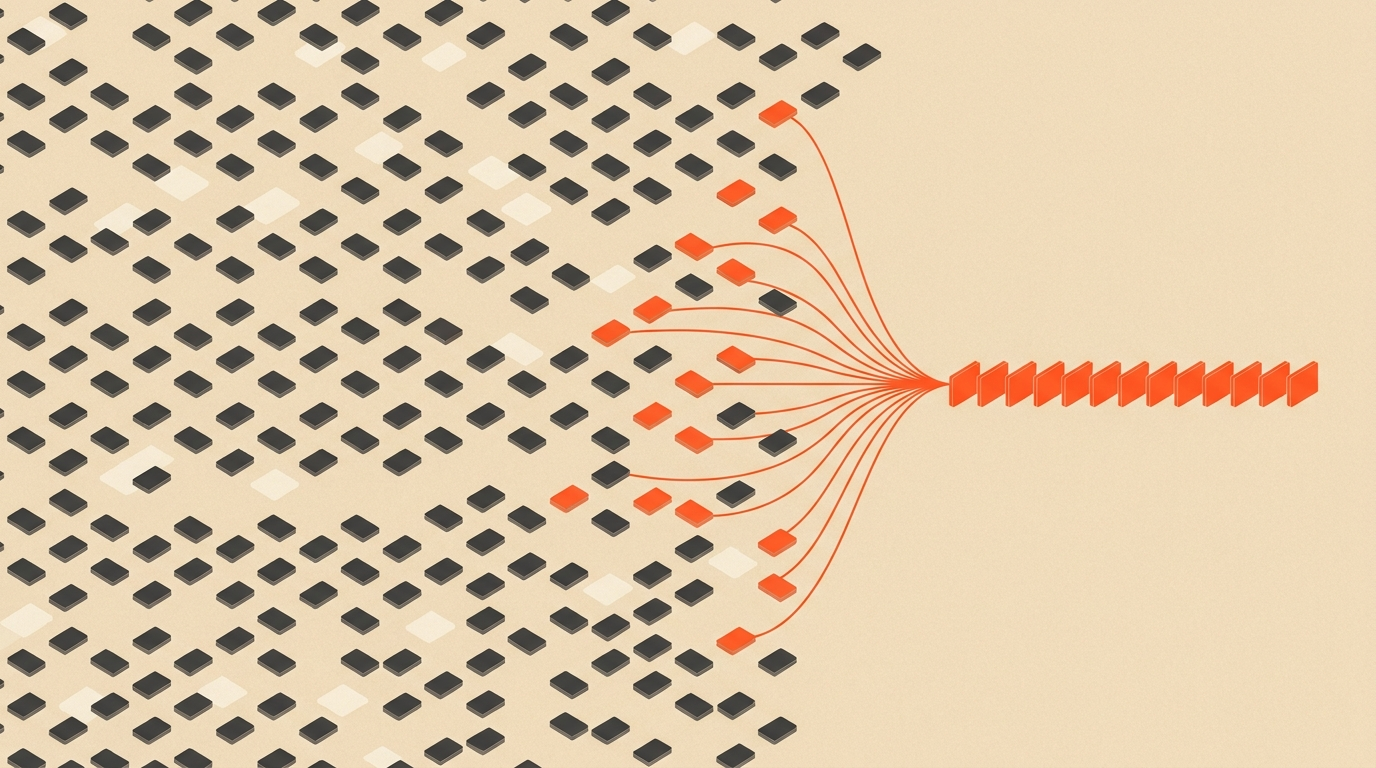
Here is what a first assembly pass actually looks like in practice, before any of the polish everyone associates with a finished edit:
Where it sits
The step between selects and a rough cut
Assembly comes after selects and before a rough cut. Selects is choosing which material is usable. Assembly is placing that material in sequence. A rough cut is where trimming, pacing, and scene-level decisions begin. Skipping straight from selects to a rough cut means making trim decisions on material whose overall place in the story has not been tested yet, which is how editors end up polishing scenes that get cut in the next pass anyway.
The distinction matters because each stage answers a different question with a different tool. Selects answers "is this usable," judged clip by clip. Assembly answers "does the story work," judged as a whole. A rough cut answers "does each scene earn its runtime," judged scene by scene. Collapsing those into one pass means answering all three questions at once, which is exactly how a first cut ends up both too long and structurally unclear at the same time.
Length
Longer than the final film, on purpose
An assembly should run noticeably longer than the target runtime, commonly cited around 140 percent of the intended final length. A 60-minute documentary might have an 84-minute assembly. An assembly built from a single one-hour interview can easily run two hours once every usable moment is placed. That extra length is expected, not a warning sign; it reflects that nothing has been cut for pace yet, only for basic usability.
Runtime targets shift depending on format too. A 30-minute broadcast episode with a fixed ad-break structure has less room for an oversized assembly, since the final length is essentially fixed by the slot it airs in. A feature documentary or a long-form YouTube piece has much more flexibility, and an assembly that runs well past 140 percent of an initial target length is not unusual if the footage genuinely supports a longer story than first planned. Treat the 140 percent figure as a rough expectation to sanity-check against, not a hard ceiling to enforce during the assembly pass itself.
What to watch for
What a first watch of the assembly should reveal
Watch an assembly for three things specifically: does the opening earn attention in the first minute, where does the middle sag and lose momentum, and does the ending land with the weight it should. These are structural questions, not sentence-level ones, and an assembly is the only stage where they can be answered honestly, because everything is still present to judge against.
Note structural problems in general terms rather than reaching for the timeline to fix them on this first watch. Writing "the middle third loses momentum around the second interview" is more useful at this stage than immediately trimming that section, because the real fix might be reordering material from elsewhere in the assembly rather than tightening what is already there. Diagnosing before treating keeps the assembly watch focused on structure instead of sliding back into scene-level trimming before the story-level questions are answered.
Documentary practice
Why documentary assemblies run especially long
Scripted projects usually have a locked shooting script going into the edit, so the assembly mostly reflects what was planned. Documentary work is different: the story is often discovered in the footage itself, so assemblies can run substantially longer relative to the final piece and get rebuilt multiple times as the narrative becomes clear. Documentary editor Dilesh Korya, whose credits include the BBC series Empire with David Olusoga, described his approach to this stage plainly in a RedShark News interview: "Keep moving. The only goal here is flow." He works in sequential passes, assembly, then rough cut, then fine cut, on duplicated timelines rather than overwriting the assembly as he goes, so the original structural pass stays available to return to.
Walter Murch, the editor behind The English Patient, for which he won the Academy Award for Best Film Editing, wrote about this same phase in his book In the Blink of an Eye. Murch describes how an editor watching an early assembly can still see themselves in every cut, remembering exactly why each one was made, which makes it hard to judge the film as a viewer would. Only after cutting and rewatching a piece multiple times does that self-awareness fade enough to see the film for what it actually is rather than the sum of individual editing decisions.
That gap between what an editor sees and what an audience will see is exactly why bringing in a second set of eyes, a producer, a director, or a fresh editor, on the assembly is common practice on documentary projects specifically. Someone who did not sit through every take of every interview will react to the assembly the way a first-time viewer eventually will, which is a genuinely different kind of feedback than an editor watching their own structural choices back.
Common mistakes
Where editors waste time at this stage
Polishing dialogue timing, adding transitions, or color-correcting a scene during the assembly phase is the most common mistake, since that work often has to be redone or discarded once the scene's place in the story shifts in the next pass. The second is skipping the assembly entirely and jumping to a rough cut, which feels faster but usually means re-litigating structural problems mid-trim instead of catching them in one clean structural watch. The third is treating the assembly's long runtime as a problem to fix immediately rather than expected raw material to shape over the following passes. A fourth mistake, common on projects with a hard deadline looming, is skipping the assembly watch entirely and moving straight into trimming from memory of the footage rather than from an actual full viewing, which quietly reintroduces the exact structural blind spots the assembly stage exists to catch.
Getting there faster
Building an assembly from a transcript instead of scrubbing footage
The slowest part of building an assembly by hand is not placing clips, it is finding them in the first place: scrubbing hours of raw footage to relocate a moment you remember but cannot immediately place. Marking selects on a transcript with word-level timecode removes that search step, since each mark already carries the exact in and out point needed to drop the clip into a sequence. That turns assembly-building into an ordering exercise rather than a repeated hunt through raw footage, which is most of where the time savings in a transcript-first workflow come from at this stage specifically.
It also changes who can build the first assembly. Ordering marked transcript selections into a rough story sequence does not require the same technical familiarity with an NLE that trimming and finishing does, which is why producers and directors, not just editors, often do a first version of this pass in a paper-edit tool before handing the approved order to an editor. The editor's time then goes toward the craft decisions an assembly cannot answer on its own, rather than the mechanical work of relocating footage that was already chosen.
The takeaway
Rough, complete, and honest about its own weaknesses
An assembly edit is supposed to be rough. Its entire value is being complete enough to judge honestly, before time gets spent polishing material that structural changes might remove anyway. Build it fast, expect it to run long, and use the first full watch to find the real problems before the fine work begins.
Sources
- RedShark News: Cutting With Curiosity, Inside a Documentary Editor's Workflow
- Walter Murch, In the Blink of an Eye, ASC/AC Store
- Academy Awards: 1997 ceremony records (The English Patient)
Related reading: What is a paper edit?, What is a multicam edit?, What is timecode?, Best paper edit software, Premiere Pro transcript workflow.
frequently asked questions
A stringout is raw selects placed in order with no shaping at all. An assembly is one step further: a full sequence that at least follows an intended story order, still untrimmed and unpolished.
Commonly around 140 percent of the target final runtime. A 60-minute documentary might have an assembly closer to 84 minutes, and a longer overshoot is normal on footage-heavy documentary projects.
No. Polishing at this stage wastes time on material that structural changes in the next pass might remove. Keep transitions simple and leave trimming for the rough cut.
The rough cut, where scene-by-scene trimming and pacing decisions begin, followed by a fine cut and then sound, color, and finishing.
Mark selects on a transcript with word-level timecode first. That removes the slowest part of assembly-building, scrubbing footage to relocate a moment you remember, turning it into an ordering exercise instead.
Documentary story is often discovered in the footage rather than locked in a script beforehand, so assemblies get built and rebuilt as the narrative becomes clear, running long relative to the final piece along the way.
You might also like...
Start selecting.

Pick the story in the transcript, export a finished rough cut.