
Transcript Editing for Journalists
A recorded interview is not a finished quote. Between the microphone and the published sentence sits a transcript, and what happens to that transcript, how it gets made, checked, and trimmed, decides whether the quote in the story matches what the source actually said. For reporters working from hours of tape on a deadline, transcript editing is where accuracy either holds or slips.
Why Transcripts Matter
The Transcript Is The Working Record Behind Every Quote
A transcript matters because it is the one complete, searchable record of what a source said, and every quote a newsroom publishes has to trace back to it. Memory is unreliable and shorthand notes miss words; an audio file by itself cannot be scanned or searched. A transcript turns two hours of tape into text a reporter can scroll, search, and cross-reference against other sources in minutes instead of hours.
It is also the record an editor or standards desk checks against if a source disputes a quote, and in some cases the record that gets produced if a story is challenged legally. Newsrooms that skip a real transcription step, working instead from memory or partial notes typed live during the interview, are guessing at the record rather than keeping one. That gap is exactly what tools built for text-based editing exist to close: they let a reporter work directly against the words on the page, with the audio one click away for verification.
A transcript is also only as clean as the interview that produced it. Framing clear, single-idea questions up front, the approach covered in ScriptCut's guide to writing interview questions, cuts down on the rambling, hard-to-transcribe tape a reporter has to wade through later.
For longer projects, an investigation built on a dozen interviews or a beat reporter's running file of sources, transcripts double as an archive. A searchable set of transcripts lets a reporter find every time a name came up across months of tape, not just the interview they remember it from. That is difficult to do with notebooks and nearly impossible from memory alone, which is part of why transcript quality is a reporting tool, not just a production step.
The Accuracy Problem
Automatic Transcription Is Fast, Not Verbatim-Accurate
The accuracy problem is that automatic transcription is fast but not reliably exact, and in journalism the gap between "close enough" and "what was actually said" is the whole story. Speech recognition still misses names, mishears homophones, and drops words during crosstalk or poor audio, all common conditions in phone interviews, press conferences, and field recordings.
The clearest recent warning came from OpenAI's Whisper model. An Associated Press investigation by Garance Burke and Hilke Schellmann found the tool did not just mishear words, it invented entire sentences that were never spoken, in some cases including fabricated medical details and racial commentary. A University of Michigan researcher found hallucinated content in 8 out of every 10 public-meeting transcripts he checked; a developer who ran 26,000 clips through the model found hallucinations in nearly all of them. Burke's reporting also surfaced a quieter risk: some organizations using AI transcripts had discarded the original audio afterward, so if the model had invented something, there was no way left to check it.
That last point is the operating rule for a newsroom. Treat an AI transcript as a fast first draft, never as the source of record, and never delete or overwrite the original recording. Every quote gets checked against the audio before it runs, the same discipline behind ScriptCut's guide to timecode, which is what makes it possible to jump straight to the exact second a quote was said instead of scrubbing an entire file by ear.
Tools Journalists Use
Otter, Trint, Descript, Rev, And ScriptCut Solve Different Parts Of The Job
Journalists reach for different tools depending on what stage of the story they are at, and treating them as interchangeable is where most workflow friction starts. Here is what each one is actually built for.
- Otter.ai is a meeting notetaker first: it joins calls automatically and summarizes them. That convenience came under scrutiny after an August 2025 class-action lawsuit over recording consent and AI training data; A Media Operator reported that some newsrooms, including The Guardian's infosecurity team, told reporters to stop using it for sensitive interviews. "For really confidential or sensitive stories, I transcribe myself," one journalist told the outlet.
- Trint markets itself directly at newsrooms and says it is used by outlets including the BBC and Reuters, with live transcription built for fast turnarounds and a policy against training its models on customer audio, a real point of difference for source protection.
- Descript is a transcript-driven audio and video editor, strongest for podcast-style cuts where a producer deletes words from the text and the audio follows along. It is general purpose, not built around journalistic chain of custody or quote verification.
- Rev pairs AI transcription with human review, which makes it a common choice when accuracy has to be certified: court transcripts, legal filings, or interviews where a single mishear carries real risk. It costs more and takes longer than pure AI transcription.
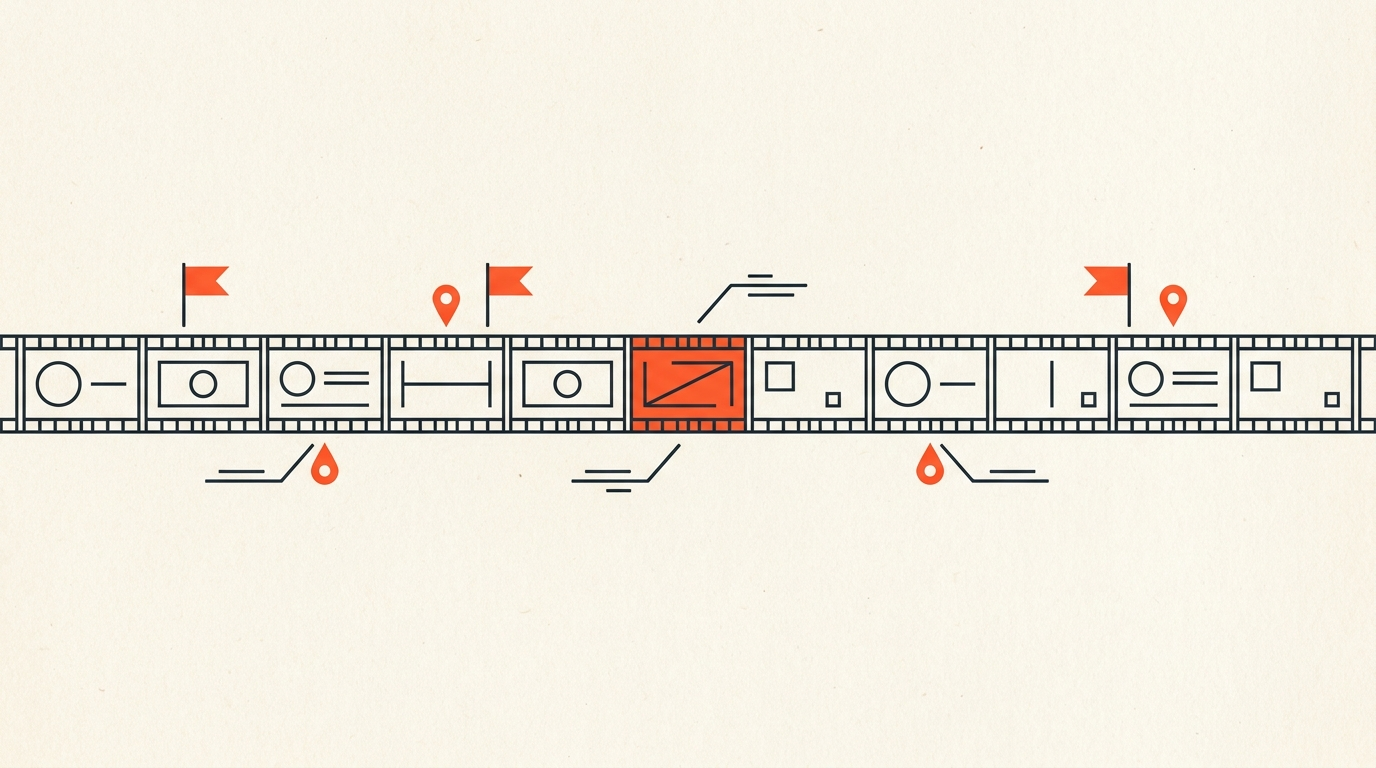
- ScriptCut picks up after the transcript exists. It turns a long recorded interview into a structured, exportable story: a reporter or producer reviews the transcript line by line, marks the soundbites worth keeping, arranges them in narrative order, and every selected line carries a word-level timecode back to the source audio, so nothing gets cut mid-word or attributed to the wrong moment.
Most working journalists end up using more than one of these: an AI pass for speed, a human check or self-transcription for anything sensitive, and a structuring tool once the strongest material has been identified.
From Transcript to Story
Turning A Raw Transcript Into A Structured, Deliverable Piece
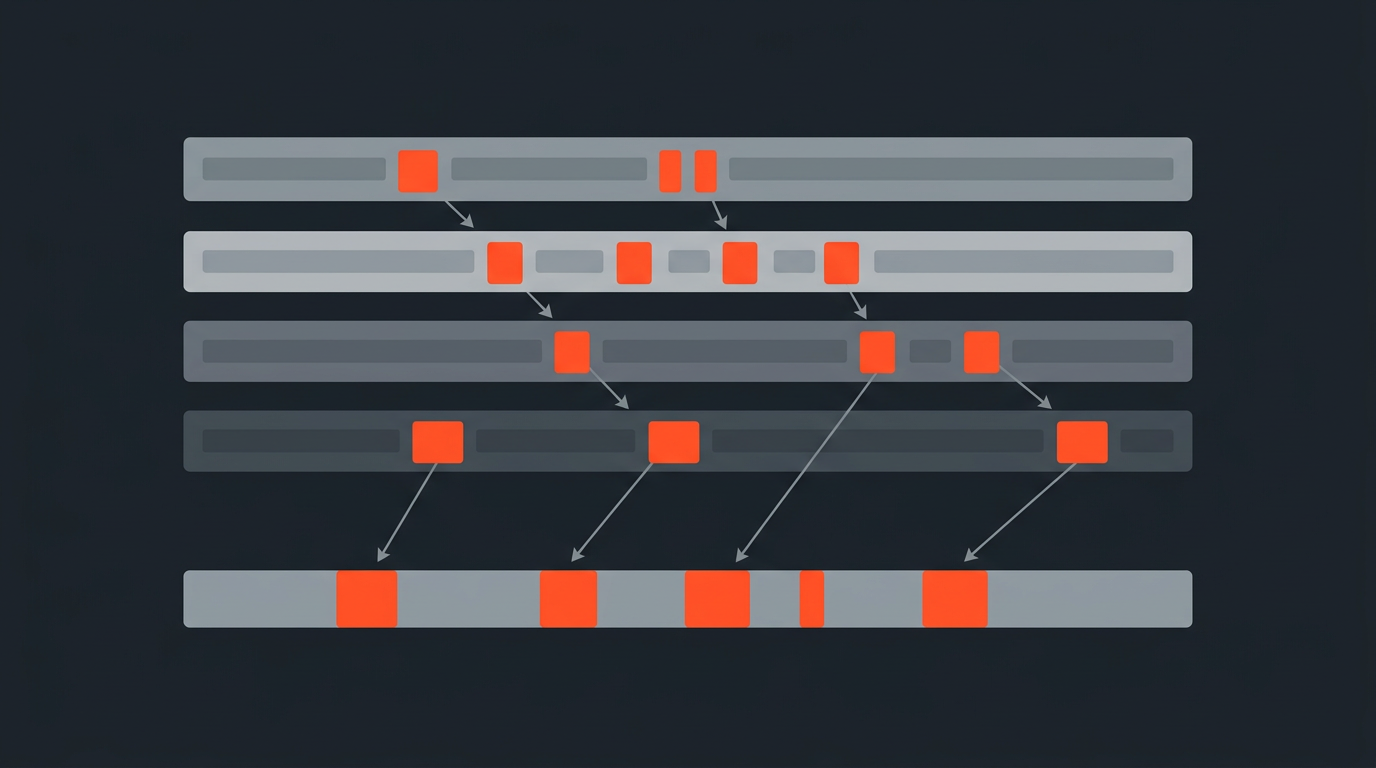
Getting from a raw transcript to a finished story is a matter of narrowing in stages, not one edit pass. Read the full transcript once against the audio before touching anything, so the context is fresh. Mark candidate soundbites on a second pass, the exact sentences that could stand alone as a quote. Then arrange the marked selections into the order the story will actually run, which is rarely the order the interview happened in.
This is the stage where a lot of newsroom workflows break down, because a plain transcript document does not track where each line sits in the original recording once it gets reordered or trimmed. A structured, timecode-based process keeps that link intact: every clip still knows which second of audio it came from, which is what makes it possible to hand a producer or editor a real timeline instead of a marked-up document. ScriptCut's paper edit approach builds the story this way before anyone opens an NLE, then generates a timeline built from the selects that Resolve, Premiere, Final Cut, or Avid can each open on their own terms, so the editor cuts to picture instead of re-finding every soundbite by ear. For newsroom pieces that stay in Premiere from start to finish, the same selects can carry straight into a project using the steps in ScriptCut's Premiere Pro transcript workflow guide.
A share link at this stage also lets an editor, producer, or standards desk review the selected quotes in context before anything is locked, catching an out-of-context cut before it airs rather than after.
Fact-Checking Quotes
Every Quote Gets Checked Against The Recording Before It Runs
Fact-checking a quote means listening back to the exact moment it was said, not trusting the transcript text on its own, automatic or human. A misheard word, a dropped "not," or a name transcribed wrong can flip the meaning of a sentence, and that error travels downstream into every draft after it if nobody catches it early.
Two failure modes come up most often. The first is the out-of-context cut: trimming a quote so tightly that it changes what the source meant, even though every remaining word was actually said. The second is what editors call a frankenbite, stitching words from different parts of an interview into a sentence the source never said in that order. Both are avoidable with one habit: check the timecode of a quote against the sentences immediately before and after it, not just the quote in isolation.
Poynter's own testing of transcription tools for journalists made a version of this point years before AI transcription got fast: a tool can save time on the first pass, but it does not replace listening back before publication. The same discipline applies to trimming filler words. Cutting an "um" that changes nothing about meaning is standard practice, covered in ScriptCut's guide to removing filler words; cutting anything that changes what was actually claimed is not the same kind of edit, and it needs a second set of eyes before it runs.
Publishing Fast
Speed Comes From A Faster Workflow, Not Fewer Checks
Publishing fast without cutting corners means shortening the distance between "recording stops" and "story is checked," not skipping the checking step. A same-day turnaround piece, a same-week hearing recap, or a breaking interview all run on the same deadline pressure, and the newsrooms that hold up under it are the ones with a workflow built for speed from the start, not one improvised under pressure at 4pm.
In practice that means transcribing as soon as the recording stops, ideally with a live or near-live tool so the reporter is reading text within minutes of hanging up the phone. It also matters most in the settings where AI transcription tends to struggle: a school board meeting with a bad room mic, a press conference with three people talking over each other, a phone interview on a bad line. Those are exactly the conditions the AP investigation flagged as producing more hallucinations, so a fast turnaround on those pieces still needs a human check before publication, not less of one. It means marking the strongest soundbites while the interview is still fresh in memory, not the next morning. It means keeping selection and arrangement in one place a producer, editor, and standards desk can all see, instead of passing a document back and forth by email with tracked changes piling up. And when the piece needs to go to video, it means handing off a real timeline rather than a list of timestamps someone else has to re-locate by hand.
None of that removes the fact-check step, it just means the fact-check happens against a clean, already-organized set of quotes instead of a wall of raw text under deadline pressure. Nieman Lab's reporting on AI entering the newsroom makes a similar point: the tools that stick around are the ones that speed up the parts of the job that were never the risky part to begin with, and still leave verification to a person.
Sources
frequently asked questions
Use AI transcription for a fast first draft, but always keep the original audio and check every quote against it before publishing. For confidential or sensitive interviews, many journalists still transcribe by hand or use a human-reviewed service.
After a 2025 class-action lawsuit over recording consent and Otter's use of conversations to train its AI, The Guardian's infosecurity team directed journalists to Trint instead, which does not train its models on customer audio.
A frankenbite is a quote stitched together from words spoken at different points in an interview, so it reads as one sentence the source never actually said in that order. It is treated as a serious ethics violation, not just an editing shortcut.
Accuracy varies a lot by audio quality and tool. An Associated Press investigation found OpenAI's Whisper model fabricated entire sentences in some transcripts, which is why AI transcripts should be treated as a draft, not a final record.
A transcript paired with the original audio can support a newsroom if a quote is disputed, but the recording itself, not the transcript text alone, is the actual record. Newsrooms should never delete original audio after transcribing.
Trint generates the transcript itself, fast and built for newsroom speed. ScriptCut picks up after the transcript exists, turning the marked-up selects into a structured, exportable story with word-level timecodes for handoff to video production.
Listen back to the exact moment in the recording using the quote's timecode, check the sentences immediately before and after it for context, and confirm no words were combined from different parts of the interview.
You might also like...

Start selecting.

Pick the story in the transcript, export a finished rough cut.