
How to Find the Best Soundbites in an Interview
A good soundbite is a self-contained thought with a clear point of view that runs about one breath or sentence, and you find it by reading the transcript, not by scrubbing the footage. Reading lets you scan an entire conversation for candidates in minutes; scrubbing forces you to wait for each line to arrive in real time and miss the quiet ones. Flag candidates on the page, then confirm the best of them by ear before you cut anything in.
The definition
What actually makes a line a soundbite
Three things separate a real soundbite from an ordinary sentence in an interview:
- It stands alone. A viewer who hasn't heard the question still gets it. "We almost shut down in year two" works without setup. "And that's when it happened" doesn't.
- It takes a position. Hedged, careful answers rarely get clipped and shared. The lines that travel are the ones where someone commits to a claim, a feeling, or an image instead of qualifying it into mush.
- It's short. Once a line runs past a sentence or two, it stops being quotable and starts being a passage. If it's dragging, it can usually still be trimmed further without losing the point.
A soundbite that outlived its interview
What Toni Morrison's 1993 Charlie Rose interview shows about it
In 1993, Charlie Rose interviewed Toni Morrison for close to an hour, mostly about her novel Jazz. Deep into the conversation, when Rose asked how she thought about racism, Morrison answered: "If you can only be tall because somebody is on their knees, then you have a serious problem." That one sentence, pulled out of an interview that was ostensibly about a book, has been re-clipped, re-captioned, and recirculated for three decades, far outliving the segment it came from.
Nothing about that line needed the rest of the hour to land. It's self-contained, it takes an unambiguous position, and it's thirteen words long. That's the whole test. An editor scanning a transcript of that interview for anything about "racism" or "problem" would have hit it in seconds; an editor scrubbing sixty minutes of tape by ear might have needed to watch most of it to find the same moment.
Watching the actual interview shows how one line surfaces out of an hour of conversation.
Read for candidates first
Scanning beats scrubbing because you see the whole conversation at once
Listening to an interview in real time means the best line and the worst filler take exactly the same amount of your attention to get through. Reading doesn't have that constraint. A transcript lets you scan for ideas, skip past dead air instantly, and hold the shape of a whole conversation in view instead of a ten-second scrub window. That's why documentary editors read transcripts before they touch footage, and why it works just as well for a forty-five-minute podcast as it does for a feature-length interview.
The catch: this only works if the transcript is tied to real timecode. A highlighted line that doesn't map back to an exact frame is just a flagged sentence, not a usable clip. Reading generates the candidate list; word-level timecode is what turns a candidate into something you can actually cut.
Markers to scan for
The verbal patterns that usually precede a strong line
A few patterns show up again and again right before someone says something worth clipping:
- Framing phrases: "the honest truth is," "what nobody tells you," "if I had to pick one thing"
- A shift in delivery: a pause, a laugh, a change in volume, someone slowing down to make sure the point lands
- Specific numbers instead of generalities: "four customers to four hundred" beats "we grew a lot"
- Turning points inside a story: the moment where an anecdote flips
None of these guarantee a soundbite. They're just places worth reading twice.
Confirm by ear
Text and audio don't always agree
A line that reads sharply on the page can fall flat when you actually hear it, and the reverse happens too: a line that looks unremarkable in text can land hard because of a pause, a laugh, or a shift in tone that doesn't show up in a transcript at all. Read to generate the widest possible list of candidates, then play back only the shortlist to confirm which ones actually work as audio. Skipping the playback step is how weak clips end up in a cut.
Common mistakes
Four ways editors miss the good lines
- Searching by ear only. Scrubbing takes longer and buries quiet, understated lines that never spike in volume or energy.
- Keeping lines that need the question. If a soundbite only makes sense with its setup attached, it's not a soundbite yet, it's a clip that still needs the context cut in.
- Confusing eloquence with quotability. A long, articulate answer can be genuinely impressive and still be un-clippable. What travels is usually one sentence buried inside it.
- Frankenbiting to force a better line. Splicing the start of one sentence to the end of another to manufacture a cleaner quote is fabrication, not editing. Find the real line or tighten inside one continuous statement.
The honest tradeoff
Reading is fast, but it isn't the whole job
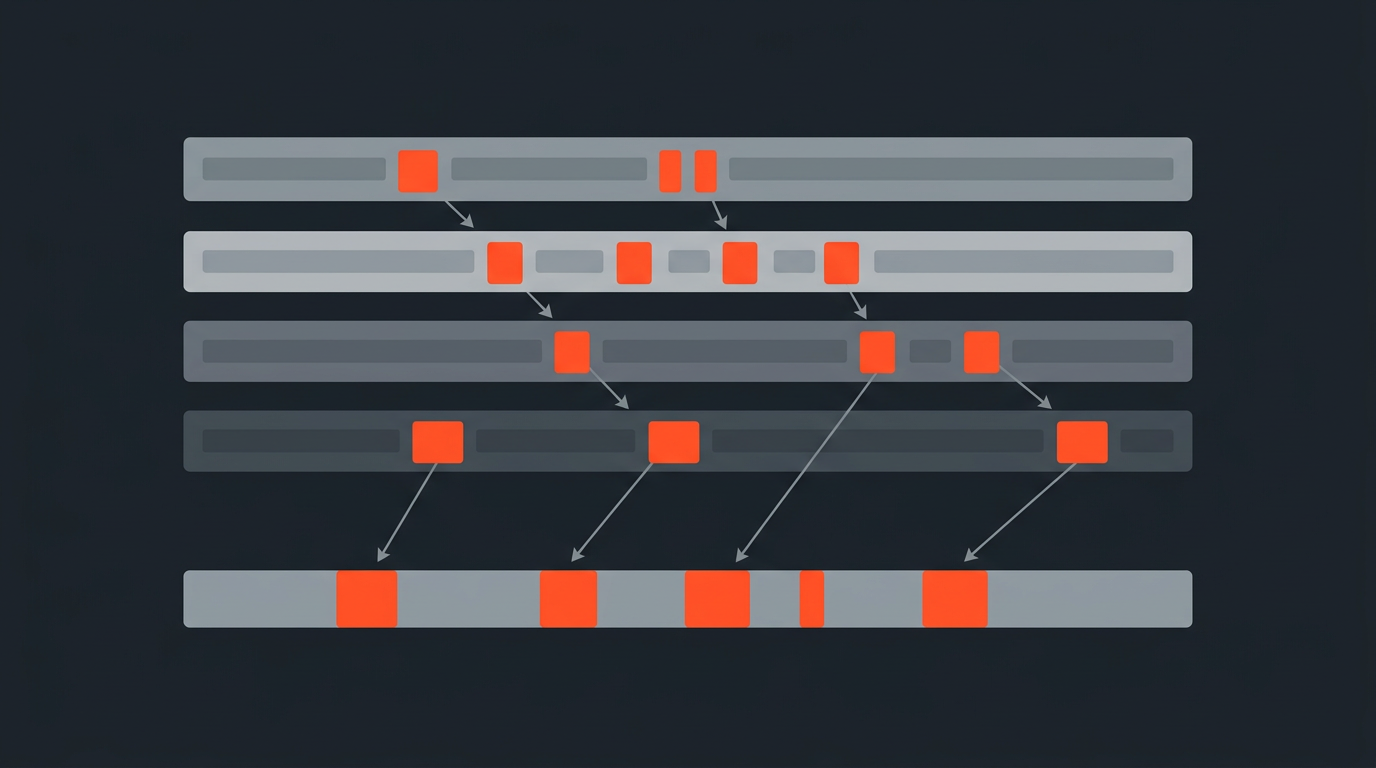
Reading-first finds more candidates faster, but it can overrate lines that work better on the page than out loud, and it can underrate lines that depend entirely on delivery. The fix isn't choosing one method over the other, it's sequencing them: read to build a wide shortlist quickly, then listen to narrow it down. What counts as a strong soundbite also shifts by format. A brand testimonial and a true-crime documentary are looking for completely different things from the same transcript.
Where this fits your workflow
From flagged lines to a usable clip
In ScriptCut's text-based editing workflow, you read the transcript, highlight candidate lines, and because every word carries a timecode, each highlight becomes a precise clip you can play back instantly for that ear-confirmation step. Once your soundbites are locked, see how to cut down a long interview without losing the story for arranging them into a finished piece, or what a sizzle reel needs if the destination is a pitch instead of a full edit.
Sources
frequently asked questions
It stands alone without its question attached, takes a clear position instead of hedging, and runs about one breath or sentence.
Reading lets you scan an entire conversation for candidates in minutes and hold the whole thing in view, while scrubbing forces you through the recording in real time.
Framing phrases like “the honest truth is,” a shift in delivery such as a pause or laugh, specific numbers instead of generalities, and turning points inside a story.
No. A line that reads well can fall flat out loud, and the reverse happens too. Always confirm your shortlist by ear before locking a clip.
Toni Morrison's 1993 Charlie Rose interview, in which she said the line about no one being tall while someone else is on their knees, has been re-clipped and recirculated for decades.
Frankenbiting splices words from different moments into a sentence someone never said. It's fabrication, not editing; the fix is finding the real self-contained line or trimming inside one continuous statement.
You might also like...

Start selecting.

Pick the story in the transcript, export a finished rough cut.