
How to Storyboard a Documentary
The premise
You cannot storyboard footage that has not happened yet
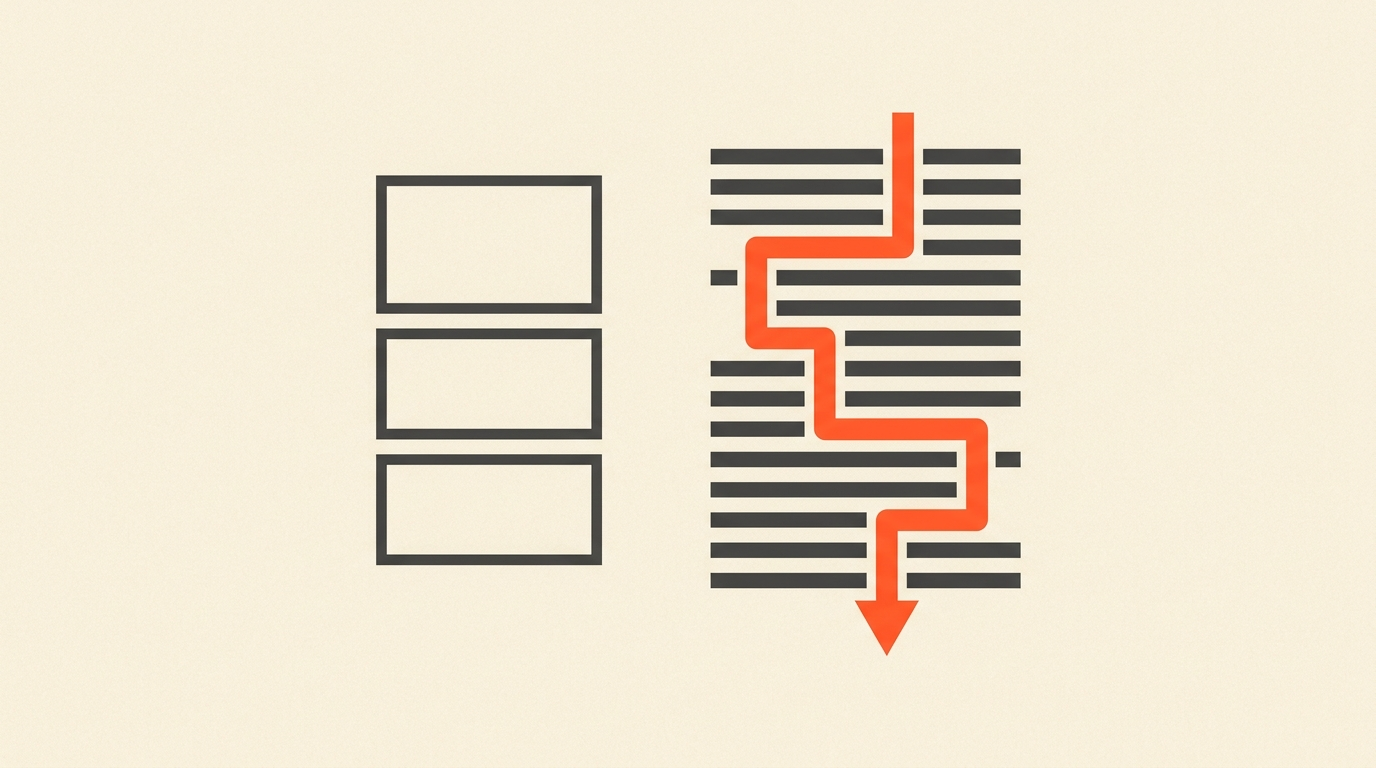
A scripted film storyboards every shot before the camera rolls because the story already exists on the page. A documentary usually does not have that luxury: the interview subject might say something unexpected, the event being filmed might not go as planned, or the whole project might be a verite shoot where nobody knows what will happen until it happens. Drawing frame-by-frame panels for a scene that has not occurred yet is not documentary planning, it is fiction with extra steps. That is not a reason to skip planning; it is a reason to plan the right things.
Pre-shoot
What actually gets planned before a documentary rolls camera
Documentary planning happens at the level of coverage, not composition. Before a shoot, a documentary team typically locks a subject or thesis, a rough shot list of the interviews and situations needed to support it, and a sense of what visual coverage (locations, b-roll, archival material) the story will likely need once it exists. That is a genuinely different document from a shot-by-shot storyboard: it says "we need to be in the room when this happens" rather than "shot 14 is a low-angle push-in." For interview-heavy documentaries specifically, the plan is mostly a list of who to talk to and what to ask, since the actual content of the film will be decided by their answers, not by a page of drawings made in advance.
Found in the edit
The real structure gets discovered in post, not planned before the shoot
20 Days in Mariupol, the AP and FRONTLINE film that won the 2024 Academy Award for Best Documentary Feature, is as extreme an example of this as exists: director Mstyslav Chernov's footage was gathered under siege, shooting to survive and document, not to fill a planned shot list. Editor Michelle Mizner built the film's 20-day countdown structure afterward, in the edit, from hundreds of hours of raw dispatches. No storyboard could have anticipated what that footage would contain, because nobody making the film knew what was going to happen. The structure, a chronological countdown that gives an overwhelming amount of raw material a shape an audience can follow, is a post-production decision, not a pre-production one.
The film's own trailer shows how much of that structure had to be found afterward, in footage nobody could have planned for.
Most documentaries are not shot under siege, but the same principle holds at a smaller scale on nearly every unscripted production: you can plan who you talk to and where you point the camera, but the actual shape of the story, the order, the turns, the ending, gets found afterward, in the footage you actually got.
The paper edit
The document that replaces a storyboard for unscripted work
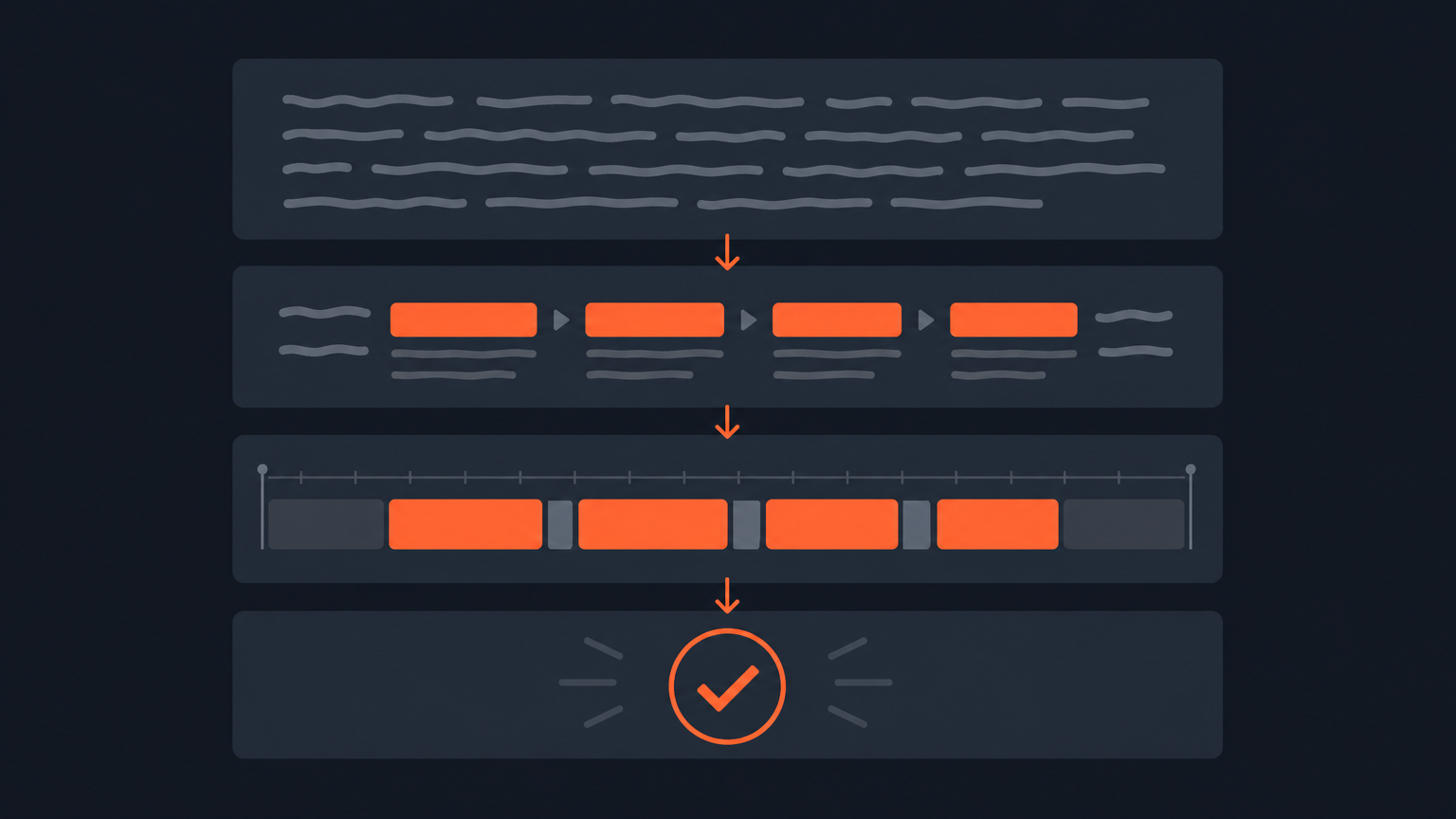
If a storyboard is the wrong planning tool for a documentary, the right one is usually a paper edit: quotes pulled from interview transcripts, arranged into a possible story order, each one referencing its exact source timecode. It does the same job a storyboard does for a scripted film, giving a director and editor a fast, revisable way to test structure, except it is built from what people actually said instead of drawings of what might happen. It is called a paper edit because you can build and rebuild it in minutes, the same way a scripted storyboard gets pinned to a wall and rearranged, except the raw material is transcript text, not sketches.
In ScriptCut, that paper edit lives directly on the transcript: select the passages worth keeping, drag them into order, and every selection carries a word-level timecode back to the source footage. When the structure holds up, the same selections export as a real timeline to Premiere Pro, Resolve, or Final Cut Pro, so the story-testing phase and the assembly phase are not two separate documents that have to be reconciled by hand.
Worked example
Turning 12 hours of interviews into a 40-minute structure
Say a documentary team has shot 12 hours of interviews across eight subjects, with no fixed order and no locked thesis going into the edit. Reading all 12 hours as transcripts and marking the strongest material is a multi-day task either way, but doing it as text is dramatically faster than doing it by re-watching footage: a skilled documentary editor can read and mark a transcript roughly as fast as they can read, versus real time or slower for scrubbing video. Once the selects exist, arranging them into a paper edit, testing two or three possible orders, and settling on a 40-minute spine is a process measured in hours, not days, because moving a quote in a text document costs nothing compared to moving a synced clip on a timeline.
Common mistakes
Where documentary planning goes wrong
Treating a pre-shoot outline as fixed, rather than a starting hypothesis the footage is allowed to overrule, is the most common mistake, and it leads editors to force real footage into a structure decided before anyone knew what would happen. Skipping the paper edit and jumping straight into the NLE to find structure is the second, and it turns every "what if we opened with the third interview instead" question into an hours-long timeline reshuffle instead of a two-minute text edit. The third is under-planning the interview list itself: documentaries fail more often from not having talked to the right person than from a weak shot list.
From plan to timeline
How the pieces connect
The workable sequence for documentary planning runs: lock a subject and rough interview list before the shoot, gather footage knowing the real structure is not decided yet, transcribe everything once it exists, build a paper edit from the transcripts to find the actual story, then export that structure as a real timeline for picture editing. Each stage hands off to the next as a document, not a guess, which is the part a scripted storyboard workflow gets right and a documentary has to arrive at differently.
Sources
- PBS FRONTLINE: 20 Days in Mariupol
- FRONTLINE: 20 Days in Mariupol wins the Academy Award
- Reduct: Elevating the paper edit for documentary filmmaking
Related reading: What Is a Paper Edit?, How to Cut a Documentary Interview, ScriptCut for Documentary Editors, and What Is a Shot List?.
frequently asked questions
Not in the same way. A scripted film storyboards a story that already exists on the page, while a documentary usually cannot draw what has not happened yet, so planning happens at the level of subjects and coverage rather than shot-by-shot composition.
A subject or thesis, a rough interview list, and a sense of the locations and situations likely needed for coverage. That is a list of what to be present for, not a page of pre-drawn shots.
A paper edit arranges quotes pulled from interview transcripts into a possible story order, each referencing its source timecode. It replaces the storyboard's role of letting you test structure quickly, built from what people actually said instead of planned drawings.
Director Mstyslav Chernov shot under siege with no fixed plan, and editor Michelle Mizner built the film's 20-day countdown structure afterward, in the edit, from the raw footage. The film won the 2024 Academy Award for Best Documentary Feature.
Treating a pre-shoot outline as fixed instead of a hypothesis the footage is allowed to overrule, which forces real footage into a structure decided before anyone knew what would actually happen.
It lets you build and rearrange a paper edit directly on interview transcripts, with every selection carrying a word-level timecode, so the same structure you test can export as a real timeline once it holds up.
You might also like...
Start selecting.

Pick the story in the transcript, export a finished rough cut.