
What Is a Shot List? A Complete Guide for Video Editors
Basics
What a shot list actually contains
A shot list is a scene-by-scene inventory of every shot a production plans to capture, written before the camera rolls. Each entry typically states the scene and shot number, a short description of the action, the shot size (wide, medium, close), any camera movement, and a note on why the shot exists in the story. It is a working document, not a creative statement: its job is making sure a crew captures every piece of coverage an editor will need, in whatever order is fastest to shoot on the day, regardless of story order.
Three documents
Shot list, storyboard, and call sheet are not interchangeable
These three get confused constantly because they all show up in pre-production, but they answer different questions. A storyboard shows what a shot should look like, drawn frame by frame, and is a visual reference. A shot list is a text inventory of every shot needed, organized for shooting efficiency, not visual reference. A call sheet is neither: it is the day's logistics, who needs to be where, at what time, with what equipment. A production can skip storyboarding entirely and still shoot from a shot list. It cannot skip the shot list and expect the editor to have coverage.
Vocabulary
The shot sizes every list uses
Shot lists lean on a shared vocabulary so a director of photography can read one and know exactly what to set up. Wide shot (WS) establishes geography and puts the subject in context. Medium shot (MS) frames roughly waist-up and carries most dialogue coverage. Close-up (CU) isolates a face or detail for emotional weight. Extreme close-up (ECU) pushes past that for a single detail, an eye, a hand, a object. Over-the-shoulder (OTS) frames one person from behind another's shoulder, standard for dialogue scenes. None of these terms are decorative; they are instructions a crew executes without further discussion.
StudioBinder, cited later in this piece for its Nolan-specific reporting, also has a straightforward walkthrough of what a shot list contains and how to build one:
Unscripted
How documentary and interview productions use the shot list differently
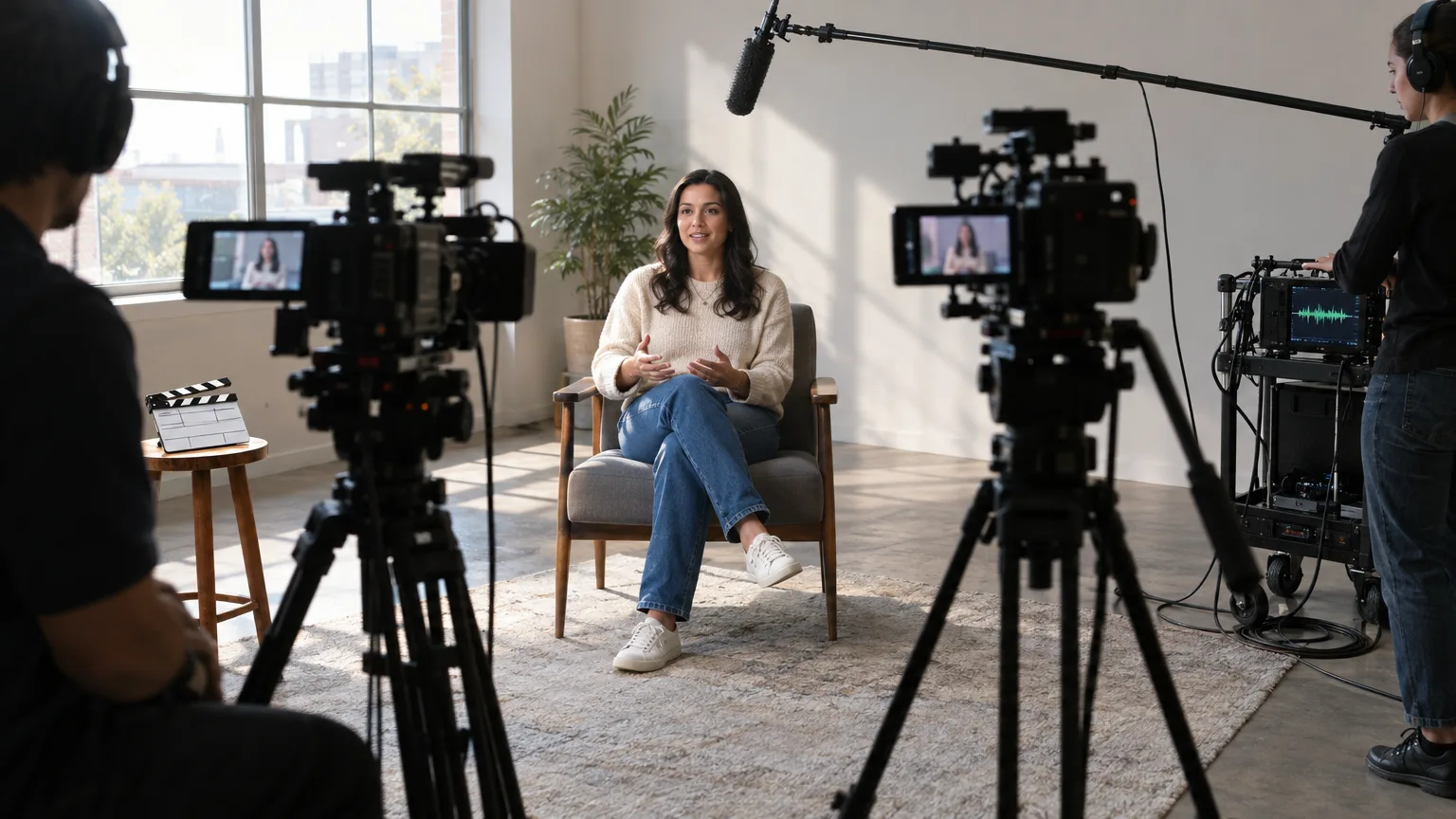
A scripted shot list exists because the story is already written; the list just breaks it into shots. Documentary and unscripted productions cannot do that, since nobody knows exactly what will happen or get said. A documentary shot list instead covers the categories of material a story will likely need once it exists: interview setups, a range of establishing and cutaway shots at each location, and enough coverage variety (wide, medium, close on the same subject) that an editor has options regardless of which lines end up carrying the story. The list plans the coverage, not the content. Once that footage is shot, the same logic carries into organizing interview footage for the edit.
Nolan's discipline
A real example of shot-list rigor
Christopher Nolan is a widely cited example of a director who plans shots with unusual precision before a camera rolls, working out practical effects, camera placement, and coverage in detail well ahead of the shoot day, a discipline StudioBinder has documented across several of his films. On the production side, dedicated shot-listing software has become standard on major productions for the same reason: Shot Lister, one widely used tool, has been used on Disney's Haunted Mansion and Netflix's Midnight Mass, precisely because a paper shot list does not scale to a production shooting dozens of setups a day across multiple units.
Writing one
A practical workflow from outline to camera plan
Start from the script or, for unscripted work, the outline of what the piece needs to accomplish. Break each scene into the shots required to cover it, numbering them in a consistent scene-shot format. Note shot size, movement, and any special equipment for each entry. Then reorder the list by location and setup, not story order, since shooting every shot that needs a given light or angle back to back saves hours a story-ordered list would waste. The list an editor eventually works from and the list a crew shoots from are the same document, just read in a different order.
The editor
How the shot list shapes what lands on the timeline
A well-built shot list is the reason an editor has options in the cutting room: enough wide, medium, and close coverage of the same moment to choose pacing rather than being locked into whatever one angle happened to be rolling. A thin shot list shows up immediately in post as a scene with nowhere to cut, forcing an editor to hold on a shot longer than the pacing wants simply because no alternate angle exists. The shot list is pre-production's biggest single lever on how flexible the edit will be. That flexibility is exactly what a rough assembly edit draws on once the coverage exists.
Common mistakes
What goes wrong, and how to fix it
Over-specifying camera movement on a shot list for a low-budget or run-and-gun shoot wastes planning time on setups that will not survive contact with the schedule. Under-planning coverage variety, shooting only the wide or only the close on a key moment, is the mistake editors complain about most, because it cannot be fixed after the fact. And treating the shot list as fixed once shooting starts ignores that a good list is a plan, not a contract; the best productions adjust it in the field when a location or a moment offers something the paper plan did not anticipate.
Sources
- StudioBinder: How to master the shot list like Christopher Nolan
- StudioBinder: What is a shot list? Examples and a definition
- Boords: Free shot list template and guide
- TechSmith: The essential guide to writing shot lists
Related reading: How to Storyboard a Documentary, What Is a Paper Edit?, What Is an Assembly Edit?, and How to Organize Interview Footage for Editing.
frequently asked questions
A shot list is a scene-by-scene inventory of every planned shot, noting scene and shot number, description, shot size, camera movement, and why the shot exists, organized so a crew can shoot efficiently regardless of story order.
A storyboard is a visual reference showing what a shot should look like, drawn frame by frame. A shot list is a text inventory of every shot needed. A production can shoot from a shot list alone without ever storyboarding.
Wide shot (WS) for geography, medium shot (MS) for dialogue coverage, close-up (CU) for emotional weight, extreme close-up (ECU) for a single detail, and over-the-shoulder (OTS) for standard two-person dialogue scenes.
Yes, even a short one. At minimum it should cover wide, medium, and close angles on the subject plus any cutaway or B-roll shots, so the editor has coverage options instead of being locked into one angle.
It determines how much flexibility an editor has. Strong coverage on the shot list gives an editor real pacing choices in the cut; thin coverage shows up in post as a scene with nowhere to cut.
Dedicated shot-listing software like Shot Lister is standard on larger productions, including Disney's Haunted Mansion and Netflix's Midnight Mass, because a paper list does not scale to dozens of daily setups across multiple units.
You might also like...



Start selecting.

Pick the story in the transcript, export a finished rough cut and ready to post short form video.
What are you looking for?
Get the ScriptCut newsletter
Thanks! Check your inbox to confirm.
Something went wrong. Please try again.