
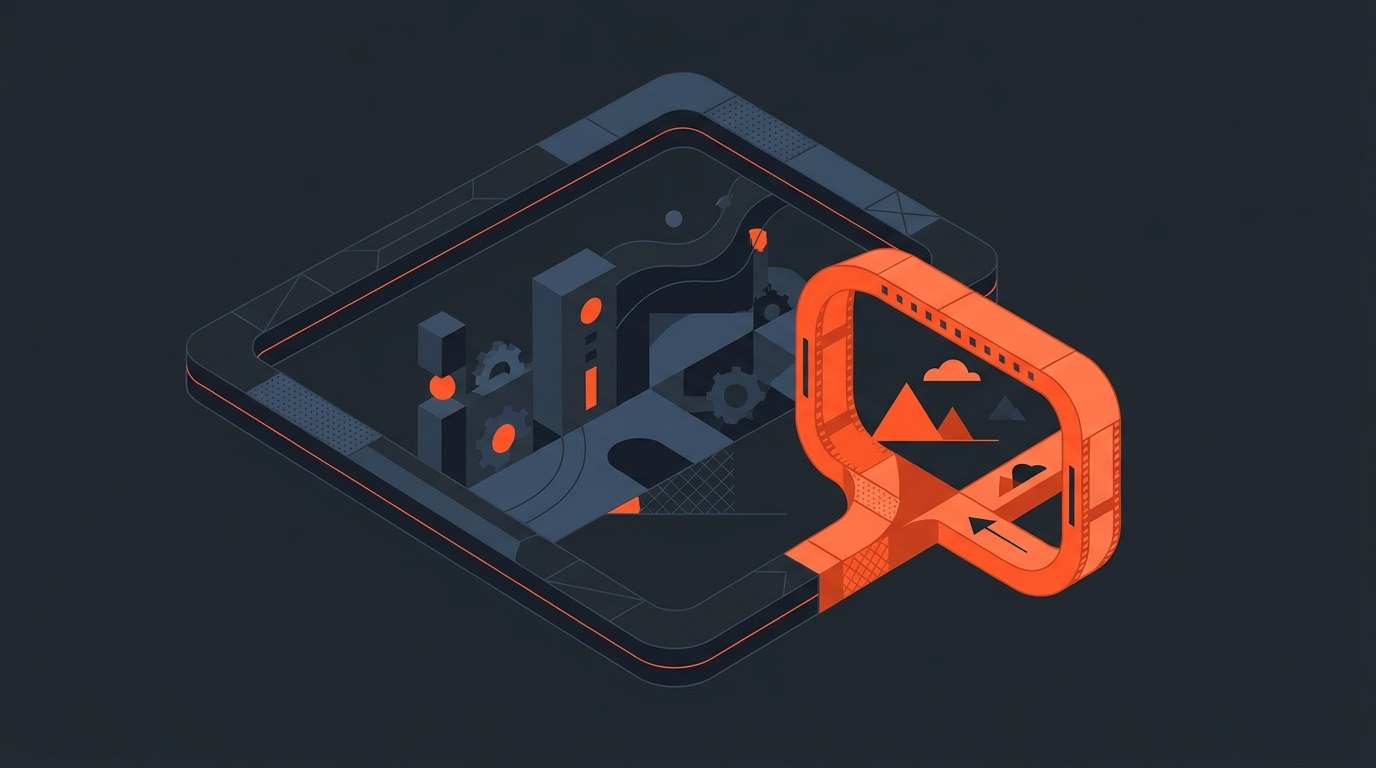
What Is a Cutaway?
A cutaway is a brief shot of something other than the main action, cut in and then cut back out, without ever technically returning to the shot you left. It's one of the oldest tools in editing because it solves a problem that's older than film itself: how do you remove a bad moment, hide a jump, or add context, without the audience noticing the seam?
Definition
What a cutaway actually is
A cutaway shot interrupts the main footage with a secondary shot, a reaction, a detail, an object, a different angle, then returns to the original scene. Unlike a reverse angle or a reaction shot that's part of the scene's actual coverage, a cutaway is often something adjacent to the action: the audience at a wedding, a clock on the wall, hands on a table. Wikipedia's definition traces the term back to early continuity editing, where it solved a practical problem: film shot in multiple takes rarely matches perfectly frame to frame, and a cutaway lets you hide the seam.
Screen examples
The Godfather's wedding cutaway, and what it's actually doing
In The Godfather (1972), edited by William Reynolds and Peter Zinner, there's a well-documented cutaway during the wedding sequence: as Michael tells Kay the story of his father threatening singer Johnny Fontane's life, the film cuts away to Fontane singing at the reception. It isn't just filling space. It lets the audience connect what Michael is describing to the man standing right there, and it plants the idea of what the Corleone family is capable of before Michael has said it outright.
Quentin Tarantino uses the technique for pure tension in Pulp Fiction (1994): in the apartment scene, a few frames cut away to pop tarts popping out of a toaster, then to a gun on the counter, then back to the door, telling the audience there's a threat in the room without a word of dialogue. Same tool, completely different job: one builds character context, the other builds dread.
Why editors reach for one
Three real jobs a cutaway does
- Hides a cut. If you need to remove ten seconds from the middle of a talking-head take, a straight cut jumps the frame (a jump cut). A cutaway to a reaction, a hand gesture, or B-roll bridges the gap invisibly.
- Adds context. A cutaway to what's being described (Fontane singing, a document being signed, a product on a table) gives the audience information the main shot alone doesn't carry.
- Controls pace. Breaking up a long static shot with a cutaway resets the viewer's attention without changing what's actually being said.
Cutaway vs. the shots it gets confused with
Cutaway, insert shot, and reaction shot are not the same thing
An insert shot is close coverage of something within the same scene and space, a hand turning a key, a phone screen, shot as part of the original setup. A cutaway is usually shot separately and can come from outside the immediate action entirely. A reaction shot shows a character's response and is typically part of standard scene coverage (over-the-shoulder, reverse angle), while a cutaway more often steps outside the conversation altogether. The three get grouped together because they serve overlapping editing purposes, but a working editor treats them differently when logging footage: inserts and reaction shots come from the shoot itself, cutaways can be built from unrelated B-roll gathered separately.
Where interview editing actually uses this
The most common cutaway you'll ever cut: hiding a jump in a talking head
In interview and documentary editing, most cutaways aren't dramatic, they're maintenance. You remove a rambling section from the middle of an answer, the subject's head position jumps between the before and after, and a two- or three-second cutaway (B-roll, a second camera angle, a reaction shot from an interviewer) covers the seam. It's unglamorous, but it's the single most common reason a cutaway gets used in non-scripted work.
How to shoot for it
What to capture on location so you have cutaways when you need them
Grab a few seconds of the room, hands, objects on a table, a second angle of the subject listening, before you wrap a location. None of it needs to be planned as a "cutaway shot" in the moment, it just needs to exist so an editor has options later. The mistake that costs editors the most time is discovering in the edit that there's no B-roll to cover a needed cut, and having to either leave the jump cut in or find a workaround.
Marking cutaway points before you're in the timeline
Doing this pass on the transcript instead of the footage
When you're working from a transcript with word-level timecode, you can identify exactly where a jump cut will land before you ever open your NLE: select the lines you're keeping, see where the gap falls, and note it as a spot that needs a cutaway. That's the workflow ScriptCut supports for interview-heavy projects: lock your selects on the transcript, export with the cut points intact, and know in advance which seams in your NLE timeline need a cutaway to cover them, instead of discovering it after the assembly is already built.
Related reading: what a selects reel is, what a shot list is, how a multicam edit works, and offline vs online editing.
Sources
frequently asked questions
A brief shot of something other than the main action, cut in and then cut back out to the original scene. It's used to hide a jump cut, add context, or control pacing.
An insert shot is close coverage of something within the same scene, filmed as part of the original setup. A cutaway is often shot separately and can come from outside the immediate action entirely.
Mostly to hide jump cuts. When you remove a section from the middle of a talking-head answer, the subject's head position jumps between the before and after. A two- or three-second cutaway covers that seam.
A few seconds of the room, hands, objects on a table, or a second camera angle of the subject listening. It doesn't need to be planned in the moment, it just needs to exist for the editor to use later.
Yes, if you're working from a transcript with word-level timecode. Marking your selects on the transcript shows you exactly where a jump cut will land before you open your NLE, so you know in advance which seams need a cutaway.
You might also like...
Start selecting.

Pick the story in the transcript, export a finished rough cut.