
What Is an Insert Shot?
An insert shot is a close-up of something already happening inside a scene, an object, a detail, a hand on a doorknob, used to direct the viewer's attention to information the story needs them to register. StudioBinder defines it as "any shot that's sole purpose is to focus the viewer's attention to a specific detail within a scene," usually framed as a close-up or extreme close-up. It has to be filmed as part of coverage; an editor cannot invent one after the fact.
Purpose
Inserts Direct Attention, Literally and Emotionally
An insert shot works on two levels at once. Literally, it makes sure the audience actually sees a plot-relevant detail, a text message, a weapon, a ticking clock, that the wide shot alone would let slip past unnoticed. Emotionally, it can convey what a character is feeling through what they are looking at or touching, without a line of dialogue explaining it. Inserts also give an editor useful flexibility: a well-placed insert can compress time, cover a continuity mismatch, or bridge a cut that would otherwise feel abrupt.
Where the Idea Comes From
Meaning Through Juxtaposition, Not Just Detail
The underlying idea behind an insert shot connects to some of the oldest editing theory in film. Soviet filmmaker Lev Kuleshov's editing experiments in the 1920s showed that audiences read meaning into the relationship between two shots, not just what is inside a single frame, cutting the same neutral face against different follow-up images changed how viewers interpreted that face's expression entirely. An insert works on a smaller, more literal version of that same principle: cutting to a specific detail tells the audience what to pay attention to and, often, how to feel about it, purely through the act of placing that shot where it is in the sequence.
Coen Brothers Example
The Big Lebowski's Object-Driven Coverage
The Coen Brothers are frequently cited as filmmakers who use insert shots with unusual precision, close-ups of specific objects, a rug, a check being written, a bowling ball, that carry weight in the story rather than sitting there as filler detail. StudioBinder's own guide on the technique uses The Big Lebowski as its reference point for this kind of object-driven coverage. The video below breaks down several of those moments directly.
Hitchcock Example
The Wedding Ring in Rear Window
Alfred Hitchcock's Rear Window has one of the most technically demanding insert shots in classic cinema. Jimmy Stewart's character, watching a neighbor from roughly 70 feet away through a courtyard, needs to identify a wedding ring the neighbor's wife has apparently left behind. Cinematographer Robert Burks had to make that detail legible from that distance using a six-inch lens on a camera boom, a real production problem solved specifically so a single insert-scale detail could carry a plot-critical beat. It is a useful reminder that an insert is not always a simple pickup shot, sometimes making one work is the hardest shot in the film.
Insert vs Cutaway
Same Scene vs a Different Scene Entirely
The two get confused constantly. An insert stays inside the scene, showing a detail of the action that is already happening, a close-up on the same watch a character is already wearing in the wide shot. A cutaway leaves the scene to show something else entirely, a shot of a crowd reacting, a different location, footage that was never part of the immediate action. A reaction shot is a third, related category, a cut to a character's face responding to something, which overlaps with both depending on whether that face was already visible in the wide shot. Some editors also call an insert a "detail shot," which is a fair description of what it actually does.
When To Use One
Four Situations That Call for an Insert
- Plot-critical details. Anything the audience must register to understand what happens next, a passcode, a name on an envelope, a missed call.
- Emotionally significant objects. A ring, a photograph, anything that carries weight for a character beyond its physical function.
- Clean transition points. An insert can bridge two moments in a way a straight cut on the actors cannot.
- Building tension. A close-up on a ticking clock or a hand hovering near a weapon can stretch a moment's suspense without any dialogue.
By Genre
The Same Technique, Different Jobs
Insert shots do noticeably different work depending on genre. In suspense and horror, an insert on a doorknob turning or a weapon glinting is doing almost all of the tension-building, the technique Hitchcock built entire sequences around. In comedy, an insert often exists purely as a punchline, a close-up on a ridiculous prop or a text message that recontextualizes the scene the audience just watched. In advertising, product inserts are close to the entire job, a commercial's tight, glossy close-up on a product label or a texture is a direct descendant of the same technique, just aimed at a product instead of a story beat. In documentary and interview-based work, inserts usually serve a quieter purpose, grounding an abstract statement in a concrete, specific object the subject is talking about.
How Many Is Too Many
There Is No Fixed Number, But There Is a Feel
There is no formula for the right number of inserts in a scene, but there is a reliable warning sign: once an insert stops adding information the audience did not already have, it has crossed from useful into decorative. A scene with one or two well-chosen inserts usually reads as deliberate. A scene cutting to a detail every few seconds usually reads as nervous editing, papering over pacing problems rather than serving the story.
Fixing Problems in Post
Inserts as a Continuity Safety Net
Beyond storytelling, inserts do quiet practical work fixing problems that surface after a shoot wraps. A continuity mismatch between two takes, a prop in the wrong hand, a glass at the wrong fill level, can sometimes be bridged by cutting to an insert of the object between the two takes, breaking the direct comparison the audience would otherwise make. The same technique compresses time an editor does not have coverage for, cutting to a detail shot and back can imply minutes have passed without needing a dissolve or a title card. None of this works without the insert having been shot in the first place, which is why experienced editors ask for a handful of generic object inserts on set even when a specific use is not yet planned.
Common Mistakes
Where Insert Shots Go Wrong
Overuse is the most common failure, too many inserts turn a scene choppy and, worse, train the audience to distrust the technique, once viewers learn every insert is meaningless filler, real inserts stop landing. Redundancy is the second failure: showing a detail the dialogue already stated outright adds nothing and slows the scene down. The hardest constraint to work around is also the simplest: an insert has to exist on set, filmed with matched lighting and continuity to the rest of the scene. An editor without that footage cannot manufacture an insert after the fact.
Vertical Video
The Same Logic Shows Up in Modern Short-Form Content
Insert-style close-ups did not stay confined to narrative film. A creator holding up a product, a close-up on a phone screen showing a text or a review, a tight cut to hands demonstrating something, all follow the same purpose an insert has always served: making sure a specific detail actually registers rather than getting lost in a wider frame. Vertical video arguably needs this more than widescreen film does, a small phone screen already compresses detail, so a deliberate insert-style close-up is often the only way a key detail reads at all.
Worked Example
A Grandfather's Watch in a Documentary Interview
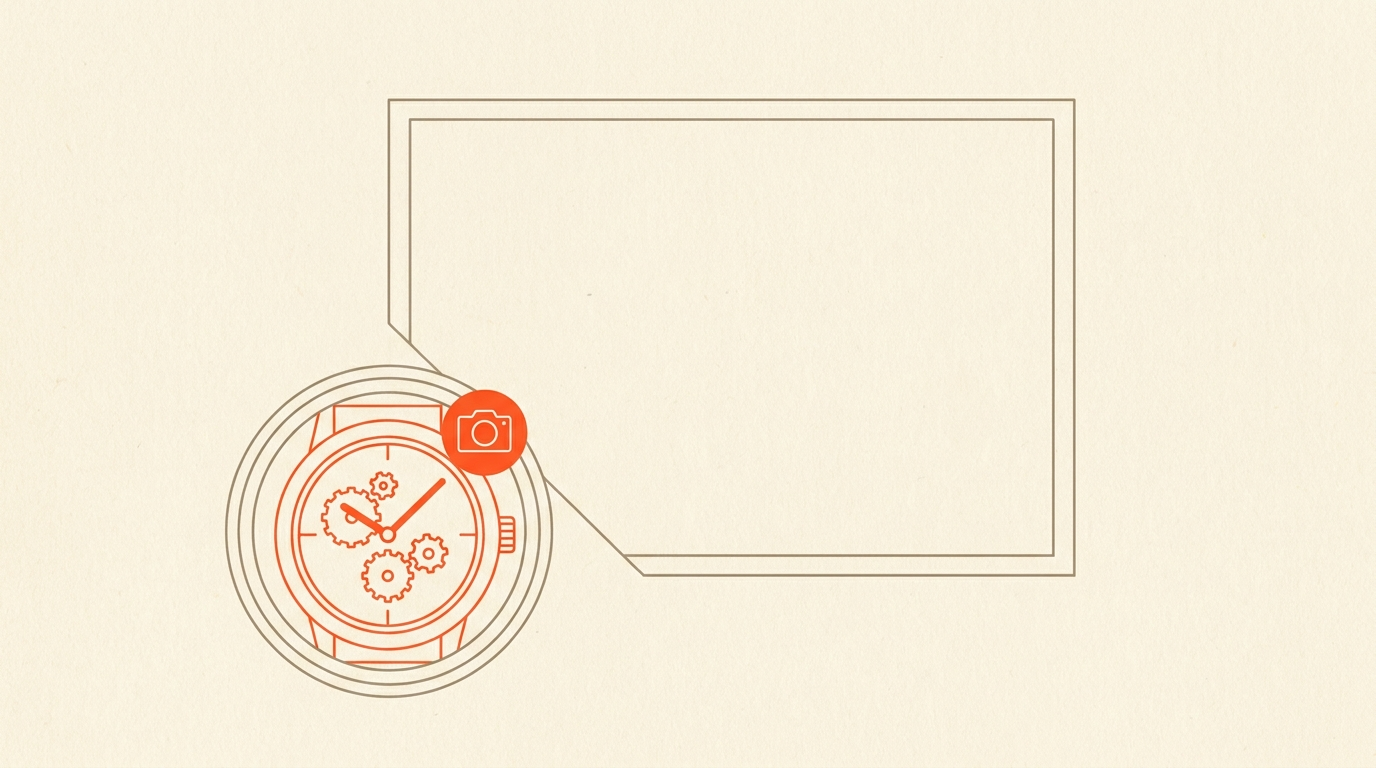
A documentary subject is describing their late grandfather and mentions his watch, still worn every day. A medium shot of the interview carries the words. A tight insert of the actual watch face, worn and scratched, cut in on the specific line about wearing it daily, does something the medium shot cannot: it makes the object real and specific instead of an abstract reference, and it gives the emotional beat a visual anchor the audience actually looks at.
Planning Inserts
Coverage Decisions Come Before Edit Decisions
Because an insert has to be shot, not invented in the edit, the decision to get one belongs on a shot list, not a wishlist during the cut. Working from a transcript first, marking exactly which lines would benefit from a supporting detail shot, is a fast way to build that list before a shoot day, see what a shot list is for how that fits into planning. ScriptCut lets an editor or director mark those moments directly in the interview transcript during the pre-edit stage, then export a timeline compatible with DaVinci Resolve, Premiere, or Final Cut Pro so the coverage plan and the story selection line up before anyone books a shoot day, the same underlying method covered in what a paper edit is.
Sources
frequently asked questions
It is a close-up of a detail already part of the main action in a scene, used to direct the viewer's attention to information the story needs them to notice, either for plot or emotional reasons.
An insert stays inside the current scene, showing a detail of the ongoing action. A cutaway leaves the scene entirely to show something that is not part of the immediate action.
Use one for plot-critical details the audience must register, emotionally significant objects, clean transition points, or to build tension without dialogue.
No. An insert has to be shot as part of coverage, with matched lighting and continuity to the rest of the scene. An editor cannot invent one from footage that does not exist.
Overusing them. Too many inserts make a scene feel choppy and train the audience to stop trusting that an insert means something, which weakens the technique everywhere it appears.
Yes, detail shot is a common alternate name for the same technique, a close-up on a specific object or element already present in the scene.
Yes. Suspense and horror often use inserts to build tension, comedy uses them for punchlines, advertising relies on them for product detail, and documentary work typically uses them to ground an abstract statement in a concrete object.
You might also like...
Start selecting.

Pick the story in the transcript, export a finished rough cut.