
What Is a Match Cut?
The Definition
What a match cut actually is
A match cut is a transition that joins two different shots by matching their shape, movement, sound, or idea, so the cut reads as one continuous thought instead of two separate images stitched together. The eye lands on something familiar in the new shot, a curve, a gesture, a rhythm, and the brain treats the jump as a natural continuation rather than an interruption.
The technique is almost as old as editing itself. Soviet filmmakers were already building meaning out of shot-to-shot association in the 1920s, and the idea carried forward into what modern editors call the match cut: a deliberate visual or aural rhyme placed exactly at the edit point. It stays a staple tool nearly a century later because it does two jobs in one move: it moves the story forward, and it makes a statement about how the two moments relate to each other. A plain cut just changes the shot. A match cut changes the shot and tells you why it changed. A match cut is not the same thing as a smash cut, a hard cut used purely for shock or comic timing with no visual or thematic link required, and it is not a dissolve, which blends two images gradually rather than joining them on a single frame. The overlap causes confusion because some of the most famous match cuts, including the one in Lawrence of Arabia below, were originally written as dissolves before an editor chose the harder, more direct cut instead.
Editors generally sort match cuts into a few overlapping types, following the breakdown on Wikipedia's match cut entry and the working list at StudioBinder:
- Graphic match: two shots share a similar shape, color, or composition, a circular window cutting to a full moon.
- Action match: a movement started in one shot finishes in the next, a hand closing a car door becomes a hand closing a coffin lid.
- Sound match: audio carries across the cut and glues two unrelated images together, a scream becomes a kettle's whistle.
- Thematic match: the connection is conceptual rather than visual, two moments separated by years or distance that comment on each other.
Most of the match cuts people actually remember blend two of these types at once. That overlap is a big part of what makes them stick instead of just reading as clever.
Why It Works
The psychology behind the illusion
A match cut works because it exploits how an audience already fills gaps between shots. Continuity editing has trained viewers for over a century to accept that a cut usually means "keep watching, we're still in the same scene," so when a match cut hands the eye a familiar shape or motion right at the edit point, the brain accepts the new shot as a continuation before it has time to question the jump.
Walter Murch, the editor behind Apocalypse Now and The Godfather Part II, wrote in his book In the Blink of an Eye that it is the job of the shot after a cut to "receive" energy from the one before it and do something with that energy: swing with it, hit it back, dissipate it, freeze it. He used exactly this idea to describe Anne Coates's famous cut in Lawrence of Arabia. A match cut is one of the most direct ways an editor can put that principle to work. Instead of hiding the seam between shots, it turns the seam itself into the point.
That is also why a match cut lands harder than a plain transition. A dissolve softens a change and asks nothing of the viewer. A match cut commits to the change, then rewards that commitment by showing the audience a reason the two shots belong in the same sentence.
Famous Examples
Three cuts every editor eventually studies
Three match cuts turn up in almost every editing class for a reason: each one solves a completely different storytelling problem with the same basic move.
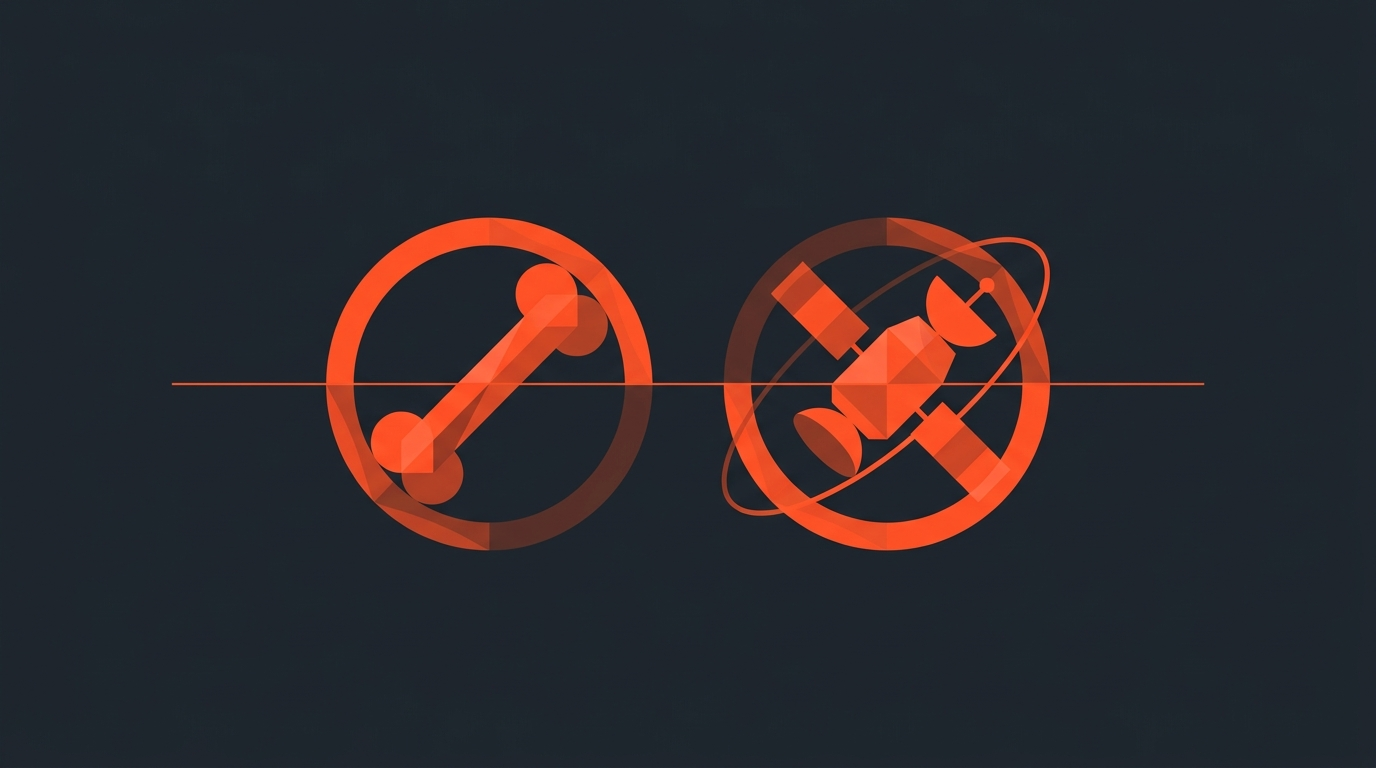
2001: A Space Odyssey (1968). Director Stanley Kubrick needed to jump forward roughly four million years of human history in a single beat. A hominid throws a bone weapon into the air, and on its way down, the shot cuts to an orbiting satellite occupying nearly the same position in the frame. One cut compresses the entire arc of human tool-making into a fraction of a second, and it remains, according to No Film School's breakdown of the sequence, one of the most studied edits in film history.
Lawrence of Arabia (1962). Editor Anne V. Coates and director David Lean needed to move Lawrence from a cramped office in Cairo to the vast Arabian desert without losing the audience along the way. Lawrence blows out a lit match, and the flame cuts directly into the disc of the rising desert sun. The script had actually called for a dissolve. Coates has said the harder, more direct cut happened almost "by accident", when she and Lean previewed the straight cut and preferred its jolt to the softer dissolve they had planned.
The Incredible Hulk (2008). Title designer Kyle Cooper and his studio, Prologue Films, had to deliver an entire origin story before the movie itself even started. The opening titles string together a series of graphic matches, veins inside an eye becoming lines on a surveillance map, a shirt seam tearing standing in for a transformation the camera never fully shows, to tell Bruce Banner's backstory without a line of expository dialogue. Cooper has said he wanted an opening that would work as the credits and the story at the same time, a sequence documented in detail at Art of the Title.
For a faster tour of the technique across more films, this walks through several more match cuts and why editors keep reaching for them.
Match Cuts vs Jump Cuts
Two edits that get mixed up constantly
A match cut and a jump cut sit at opposite ends of the same toolkit. A match cut hides the seam between two shots. A jump cut points right at it.
A jump cut stays on the same subject and skips forward in time, breaking continuity on purpose to create energy or compress a moment, the kind of cut a fast-moving explainer video or a nervous on-camera confession uses to keep pace. A match cut does the opposite. It connects two different subjects, times, or places, and makes the jump between them feel smooth, even inevitable.
The two also serve different intentions. A jump cut says time is moving faster than usual, and it wants you to notice. A match cut says these two things belong in the same sentence, even if they are separated by four million years or four thousand miles. Reaching for the wrong one in a script note or an editor's brief usually means asking for the wrong effect entirely.
How to Plan One
Where the real work happens
A match cut gets planned long before anyone opens an editing timeline. It starts on paper, when a director or editor notices two moments in a script or a shot list that share a shape, a gesture, or an idea, and makes sure both get shot so the connection survives the cut.
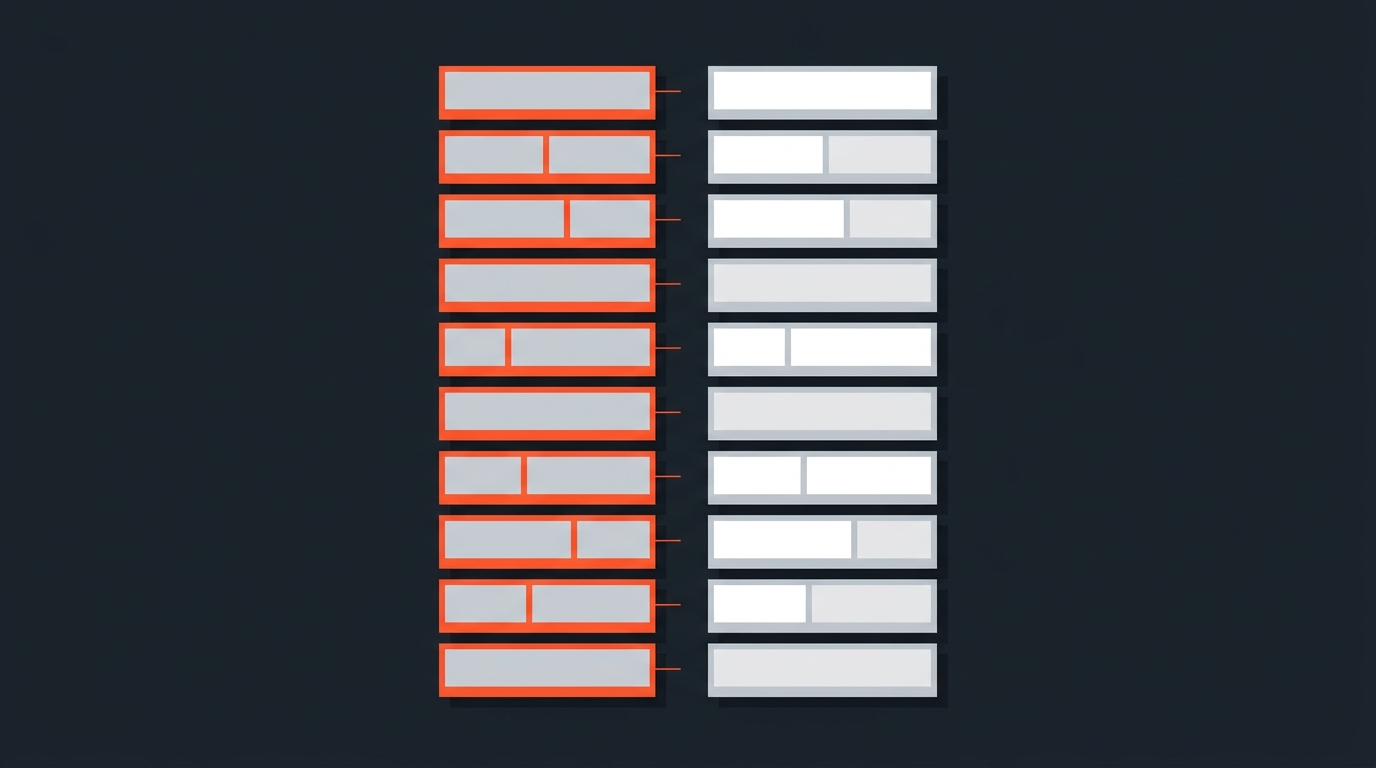
That means thinking in pairs while building a shot list: if a scene opens on a character spinning a coin, is there a later shot with the same circular motion that could receive it? Documentary and interview editors do a version of the same thing with text-based, transcript-first editing, scanning a transcript for two answers that rhyme thematically even though they were recorded hours or days apart, then building the sequence around that rhyme instead of strict chronology. A paper edit is exactly where that kind of pairing gets mapped out, well before a single frame gets trimmed.
Framing matters just as much as the idea behind it. Kubrick's bone and satellite sit in nearly the same position in the frame. Lean's flame and sun match in size, color, and light direction. A match cut that is conceptually clever but visually mismatched rarely survives the edit, because the eye notices the seam the idea was supposed to hide.
It is worth planning for restraint as well as for the cut itself. A match cut asks the audience to do a small amount of interpretive work, connecting two images or ideas on their own, and that only lands if the rest of the sequence has earned the audience's attention. Dropping one into a scene that has not built up any thematic weight tends to read as a technical flex rather than a storytelling choice, which is the fastest way to take a viewer out of a moment instead of pulling them deeper into it.
Cutting It in Post
Making the transition actually land
The cut itself comes down to a handful of frames, not just an idea. An editor lines up the outgoing and incoming shots so the shared shape, motion, or sound peaks at the same point, then trims a frame or two off either side until the two halves feel like one continuous move. Coates famously got there by pulling exactly two frames out of Lean's flame-to-sun cut, the difference between a transition that reads as clumsy and one that reads as inevitable.
A few things tend to separate a match cut that works from one that does not:
- Match the light and color, not just the shape. Two circles cut together fine. Two circles lit in completely different ways fight each other.
- Let sound carry across the cut. A tone or note that bridges the edit sells the connection before the eye has even finished processing the new image.
- Use it once, on purpose. One well-placed match cut reads as a statement. Three in a row reads as a stylistic habit.
- Know exactly which frame you are cutting on. A match cut lives or dies on a handful of frames, so accurate, frame-level timecode is not optional. It is the whole craft.
That last point is where the groundwork for a match cut and the groundwork for almost any other cut overlap. Before a match cut ever gets built on a timeline, someone has to find the two moments worth connecting in the first place, buried in hours of raw footage or a transcript nobody has fully read yet. ScriptCut is built for that earlier stage: it lets an editor read and select the exact lines worth keeping straight from a word-level transcript, with the precise timecode locked to every choice, then hand a structured story over to whoever is cutting it. It will not invent your match cut for you. It will make sure the two moments you want to connect are exactly where you left them once you get into Premiere Pro or any other NLE.
Sources
frequently asked questions
A match cut is an edit that joins two different shots by matching their shape, motion, sound, or idea, so the cut feels like one continuous thought instead of two separate images.
Most editors point to Stanley Kubrick's bone-to-satellite cut in 2001: A Space Odyssey (1968) or Anne Coates and David Lean's match-to-sunrise cut in Lawrence of Arabia (1962).
A match cut connects two different shots through a shared shape, motion, sound, or idea and hides the seam between them. A jump cut stays on the same subject and skips forward in time, making the seam obvious on purpose.
A match cut is a hard cut that joins two shots on a single frame using a shared shape, motion, or idea. A dissolve blends two images gradually over several frames, with no requirement that they visually rhyme.
Graphic (a shared shape or composition), action (a movement that continues across the cut), sound (audio that carries between two different images), and thematic (a conceptual link between two moments).
Skip it when the connection is only visually clever with no story or thematic weight behind it, or when the moment calls for a clean, invisible cut instead of one that draws attention to itself.
Almost always before filming or in the edit's earliest planning stage, in a paper edit or shot list, where an editor identifies two moments worth connecting and makes sure both get shot or selected to match.
You might also like...
Start selecting.

Pick the story in the transcript, export a finished rough cut.