
What Is a Rough Cut? A Video Editor's Guide
Definition
What a rough cut actually is
A rough cut is the first version of an edit where every scene is in its final order and the film runs roughly the right length, but almost nothing else is finished. No color, no sound mix, no titles, no visual effects. It is the draft that proves whether the story works, not the draft that looks like the final product.
That distinction matters more than it sounds. A lot of first-time editors (and a lot of clients watching a cut for the first time) judge a rough cut the way they'd judge a trailer: does it look good? That's the wrong question. The right question is: does the story land in this order, at this length, with these moments? Everything cosmetic comes after, in offline editing's later stages and then online finishing. If you've already built a paper edit, the rough cut is where that plan first exists as moving, playable footage.
Assembly vs rough cut
Where the rough cut sits in the edit
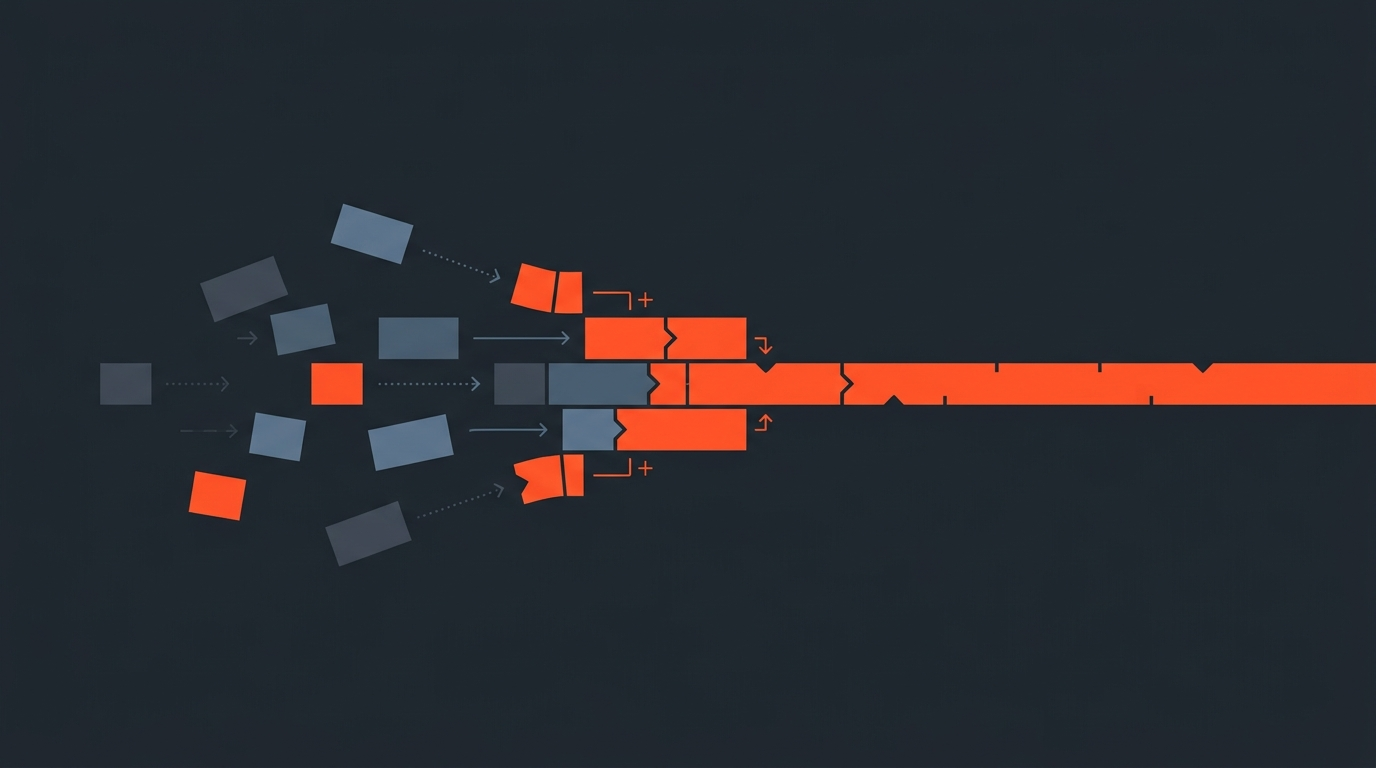
Editors generally move through three broad stages: the assembly cut, the rough cut, and the fine cut (sometimes called picture lock when it's done). The assembly is every usable take strung together in script order, no judgment applied yet, usually far too long. The rough cut is the first pass where real decisions get made: what stays, what goes, and whether the order the script implied is actually the order that plays best on screen.
The difference isn't cosmetic. An assembly answers "does the footage cover the story." A rough cut answers "does the story work for an audience." That's a much harder question, and it's the one that actually determines whether a project succeeds. StudioBinder's breakdown of the editing stages puts the assembly and rough cut in the same "offline" bucket for exactly this reason: both happen before anyone touches color or sound, but only one of them involves real storytelling choices.
Real example
The Star Wars screening nobody applauded
The clearest real-world illustration of what a rough cut is for, and isn't for, comes from a screening that's become one of the most retold stories in Hollywood: George Lucas showing an unfinished cut of the original Star Wars to a small room in early 1977, ahead of the film's May release.
The visual effects weren't done, so the space battles were temporarily replaced with black-and-white World War II dogfight footage as placeholder coverage. Brian De Palma, who was in the room, remembered the opening crawl as "gibberish" and reportedly pushed hardest on the story's clarity. According to accounts of the night, the film ended to "no applause, just an embarrassed silence." Steven Spielberg told Lucas at the time, "George, it's great. It's gonna make $100 million," but years later, in the Disney+ documentary Light & Magic, he was blunter about the state of that print: "To say it was not finished is a kindness."
Nothing about that screening was a verdict on the finished film, which went on to reshape the industry. It was a rough cut doing exactly its job: showing a room of experienced filmmakers whether the story, structure, and pacing worked before Lucas spent more money finishing effects, sound, and score on a movie that might still need restructuring. De Palma's blunt notes on the crawl are widely credited with pushing Lucas toward the concise opening text scroll that made it into theaters. De Palma later disputed some of the details of how the story gets retold, but the core fact holds: an unfinished, unglamorous cut is what got shown, and the reactions it produced changed the film.
The work
What actually happens during a rough cut
A rough cut is built through a specific, repeatable set of tasks, not a single pass. The editor trims clips for pace and shape, not frame-accurate precision yet, cutting scenes down to roughly the length they should run. Where multiple takes exist, this is where a performance actually gets chosen: which delivery, which reaction, which version of a line carries the scene. Temporary music and sound effects get dropped in, not because they'll survive to the final mix, but because a scene plays differently silent than scored, and the editor needs to gauge tone honestly. Coverage and b-roll get placed to bridge gaps or hide cuts that would otherwise feel abrupt. And scenes sometimes move, because an order that made sense on paper doesn't always make sense once it's cut together and timed.
All of this is iterative. Cut a scene, watch it in context with what's around it, adjust, watch again. A rough cut isn't a single decision, it's dozens of small ones compounding until the whole thing plays.
Here is a short breakdown of what actually separates a rough cut from a finished edit, and why it is allowed to look unfinished:
Cleanup timing
Why cleanup belongs in the rough cut, not before it
Removing filler words, false starts, and stumbles should happen after a rough cut's structure is settled, not before. Cleaning every "um" and restart in raw footage before you know which sections of that footage even survive the rough cut wastes real time polishing material that's about to get cut anyway.
Once the rough cut has settled which sentences, which takes, and which scenes actually make the film, cleanup work can focus only on the material that's staying. That's also why the order of ScriptCut's own workflow isn't arbitrary: selecting and arranging the strongest lines from a transcript comes first, effectively building the rough cut's structure, and Cleanup work happens on top of that surviving selection, not before it exists.
Workflow
Assembling a rough cut from a transcript instead of raw footage
The traditional path to a rough cut means scrubbing through raw footage by ear, marking in and out points by eye, and re-watching long stretches of material to find the handful of lines worth using. ScriptCut starts from the transcript instead. An editor reads the text, selects the strongest lines directly in that text, and because every word carries its own timecode, each selection is already a precise, frame-accurate cut point back in the source media, no re-scrubbing required.
Those selections get arranged into story order (the same structural decision-making that defines a rough cut), reviewed and approved through a share link if a client or producer needs to sign off, and then exported as a real timeline: XML or EDL for Premiere Pro, DaVinci Resolve, Final Cut Pro, or Avid, plus subtitles and audio if needed. That exported timeline lands in the NLE already carrying the right shots, in the right order, at roughly the right length. It's a rough cut on arrival, not a pile of clips waiting to become one. What changes is how much of the hunting-for-the-right-moment work happens before an editor ever opens a timeline, since it's already done against text instead of against scrubbing raw footage. Word-level timecode is what makes that handoff trustworthy: the cut point exported is the cut point that was selected, frame for frame.
Feedback
Getting notes on a rough cut without losing the shape
A rough cut is the version you screen for notes precisely because it's finished enough to react to but not so polished that feedback drifts into trivial fixes instead of real story problems. Watch the whole thing before making any single change. Separate story notes ("this section drags," "we don't understand her motivation here") from craft notes ("that cut feels early"), and resist the second kind of note until the first kind is settled.
Editor Walter Murch, whose career spans The Godfather, Apocalypse Now, and The English Patient, described in In the Blink of an Eye how an editor loses objectivity the more times they watch their own cut, remembering the reasoning behind each choice rather than seeing the film the way a first-time audience would. That's precisely why outside reactions to a rough cut, however blunt, are useful data rather than a threat to the work. The awkward silence in that 1977 Star Wars screening room wasn't a verdict on the film; it was information Lucas didn't have access to on his own.
Mistakes
The most common rough-cut mistake
The most common mistake is polishing at the frame level before the structure is settled: perfecting a scene's exact cut points, pacing, or temp color before confirming that scene survives in the film at all. Because rough cuts change scene by scene as notes come in, fine work done too early on a scene that later gets trimmed, moved, or cut entirely is work thrown away.
The fix is ordering discipline: settle which scenes exist and in what order first, get agreement that the structure works, and only then move into shot-level and frame-level refinement. A rough cut that's still rough in the small details but locked in the big ones is exactly where it should be. A rough cut that's polished in the details but still shifting in structure is a sign the process is running backward. A close relative of this mistake is treating a specific beat, like the opening moments of a scene or episode, as something to perfect in isolation before the surrounding structure is locked; the same discipline that governs a whole rough cut applies to a single cold open or any other high-stakes moment inside it.
Length and runtime
How close to final length a rough cut should be
A rough cut should land within roughly ten to twenty percent of the target runtime, not exact, but close enough that pacing decisions mean something. An assembly that runs twice the intended length isn't giving anyone useful information yet, because everything still feels slow by comparison. Trimming toward that rough target is part of what separates a rough cut from the assembly before it: length becomes a real constraint the editor is working against, not a number to worry about later.
This is also where a transcript-first workflow pays off early rather than late. Selecting lines against a transcript instead of scrubbing footage gives an editor a running length estimate before a single frame is cut in the NLE, because the selected text already implies a runtime. Arranging the story then happens against that running estimate directly, so the rough cut that gets exported is already close to length instead of needing a separate trimming pass just to get in the neighborhood.
Sources
frequently asked questions
A rough cut is the first full version of an edit where every scene is placed in its final order and the runtime is roughly right, but color, sound, titles, and effects are still missing. It exists to prove whether the story works, not to look finished.
An assembly is every usable take strung together in script order with no real editorial judgment yet applied. A rough cut is the first pass where an editor actually decides what stays, what goes, and whether that order plays for an audience.
After. Cleaning up every stumble in raw footage before you know which sections survive the rough cut wastes time on material that may get cut anyway. Cleanup should happen only on the lines and scenes the rough cut keeps.
A rough cut is done when notes stop being about structure and pacing and start being about small details, like a specific line reading or a slightly early cut. Once the big shape stops changing, it is ready to move into the fine cut.
Polishing frame-level details, like exact cut points or temp color, on a scene before its place in the film is settled. If that scene later gets trimmed or cut, the early polish is wasted work.
You might also like...
Start selecting.

Pick the story in the transcript, export a finished rough cut.